When Does Michigan Use a Roadside or Station Breath Test?
A traffic stop can leave a driver trying to sort out two different breath tests: a quick roadside screening and a more formal test after arrest. They are not the same. In Michigan, a preliminary breath test (PBT) and an evidentiary breath test have different purposes and may play different roles in an OWI investigation. For readers in Traverse City, Neumann offers this overview of what the distinction can mean and why the result of one test should not be confused with the other.
Roadside breath test vs. evidentiary breath test in Michigan
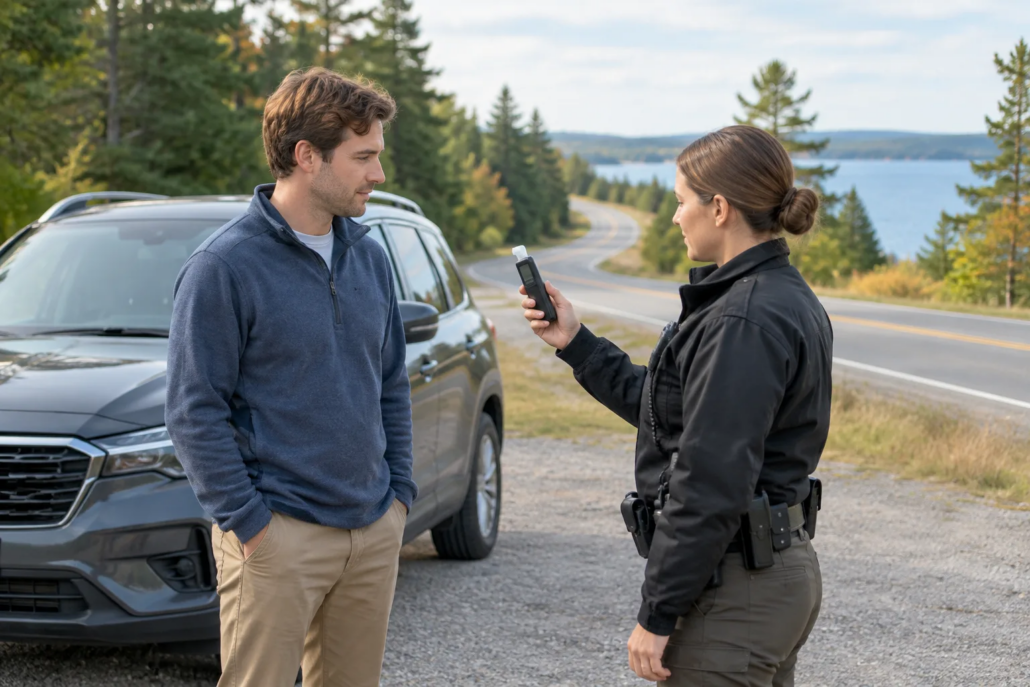
A roadside PBT is generally a handheld screening tool. An officer may request it during an investigation to help assess whether there is evidence of alcohol use and whether further investigation is warranted. It produces an estimate, but it is not the same procedure as the formal breath test conducted after an arrest.
An evidentiary breath test is intended to measure alcohol concentration for use as evidence. It is typically administered with approved equipment under prescribed procedures, often at a police station or another designated location. A driver may also be asked to take a chemical test involving blood or urine, depending on the circumstances.
What the roadside test can—and cannot—show
A PBT result may be one factor an officer considers when deciding whether there is probable cause to make an arrest. It is a screening result, not a complete account of a person’s driving, the officer’s observations, or other evidence. In general, Michigan treats roadside PBT evidence differently from a post-arrest evidentiary test, and the PBT’s use in court is limited. The precise legal significance depends on the facts and applicable rules.
That distinction matters in Traverse City just as it does elsewhere in Michigan: a roadside reading should not automatically be treated as the final or controlling test result.
Why the station test can matter more in court
The evidentiary test may be more directly relevant to proving an alcohol concentration in an OWI case. But a machine-generated result is not automatically conclusive. Questions may arise about whether the test was administered properly, whether the instrument was functioning and maintained as required, and whether relevant records support the result. The surrounding evidence and the legal foundation for admitting a result also matter.
Michigan’s history includes a 2020 evidentiary breath-test moratorium connected to concerns about instrument records. That event is historical, not a statement that testing is currently suspended. It illustrates why equipment documentation and testing procedures can be important subjects of review. For background, see Michigan’s 2020 evidentiary breath-test moratorium.
A Traverse City OWI investigation may involve more than one test result. Officers’ observations, driving conduct, statements, and other evidence may be considered along with test evidence. A defense review may ask whether the roadside screening was properly understood, whether the later test followed required procedures, and whether the prosecution can establish the reliability and admissibility of its evidence. These are case-specific questions, not assumptions that a test is invalid.
What to understand about the process and your choices
The two tests may occur at different stages, and the rules surrounding them are not interchangeable. In general, a PBT is associated with the roadside investigation; an evidentiary chemical test is requested after an arrest and may have separate consequences if a person refuses. A driver’s rights and obligations can depend on the circumstances, the type of test requested, and Michigan law. Refusing one test should not be assumed to have the same effect as refusing another.
After a stop in Traverse City or elsewhere in Grand Traverse County, it can help to keep the stages clear when reviewing the allegation:
- Identify which test was requested and when it occurred.
- Distinguish the officer’s roadside screening from any post-arrest chemical test.
- Note what records, observations, and procedures may relate to each test.
- Consider how the evidence fits together rather than focusing on one number alone.
An OWI allegation can also raise concerns beyond the test itself. For example, commercial drivers may face separate licensing or employment issues. Readers looking for that specific context can review OWI consequences for Traverse City commercial drivers. The consequences and available issues depend on the person’s circumstances and the allegations involved.
Frequently Asked Questions
Can I refuse a roadside preliminary breath test in Michigan?
Michigan law treats a roadside PBT differently from a post-arrest chemical test, and refusing one may have consequences distinct from refusing the other. The applicable rules and possible effects depend on the situation and current law. A driver should not assume that information about one type of test automatically applies to another. An attorney can explain how the circumstances of a particular stop may affect the analysis.
Does a roadside PBT prove that someone was over the legal limit?
A PBT is a roadside screening test and should not be confused with the later evidentiary test used to measure alcohol concentration. Its legal role is generally limited, and it does not by itself tell the whole story of an OWI investigation. The effect of a particular result depends on the evidence, the purpose for which it is offered, and the applicable Michigan rules.
Can an evidentiary breath-test result be challenged?
A result may be examined along with the procedures used to administer the test, the instrument’s maintenance and records, and whether the evidence meets legal requirements. This does not mean that every test result is unreliable or inadmissible. The relevant questions depend on the facts and available documentation in the individual case, including how the test was performed and presented.
Where might a Traverse City OWI case be handled?
The court and process depend on the charge and case circumstances. An OWI matter arising in Traverse City or Grand Traverse County may be handled in the appropriate local court, with the specific court depending on factors such as the level of the charge. Court procedures and applicable law can change, so a lawyer familiar with Michigan criminal cases can help explain what process applies to a particular allegation.
How Neumann Can Help
Neumann is dedicated to helping people understand the evidence and procedures involved in Michigan OWI investigations. A careful review may distinguish the roadside PBT from a later evidentiary test, examine the available records, and assess how the evidence fits the allegations. The issues can differ from one case to another, and no single test result answers every legal question. If you are facing an OWI allegation in Traverse City or nearby, contact Neumann to discuss your circumstances and request a free consultation or case evaluation.
The information in this article is for educational purposes only and does not constitute legal advice. Contact a qualified attorney authorized to practice in the jurisdiction that applies to your matter for advice specific to your situation.


Leave a Reply
Want to join the discussion?Feel free to contribute!