Commercial Vehicle Claims After a Michigan Crash
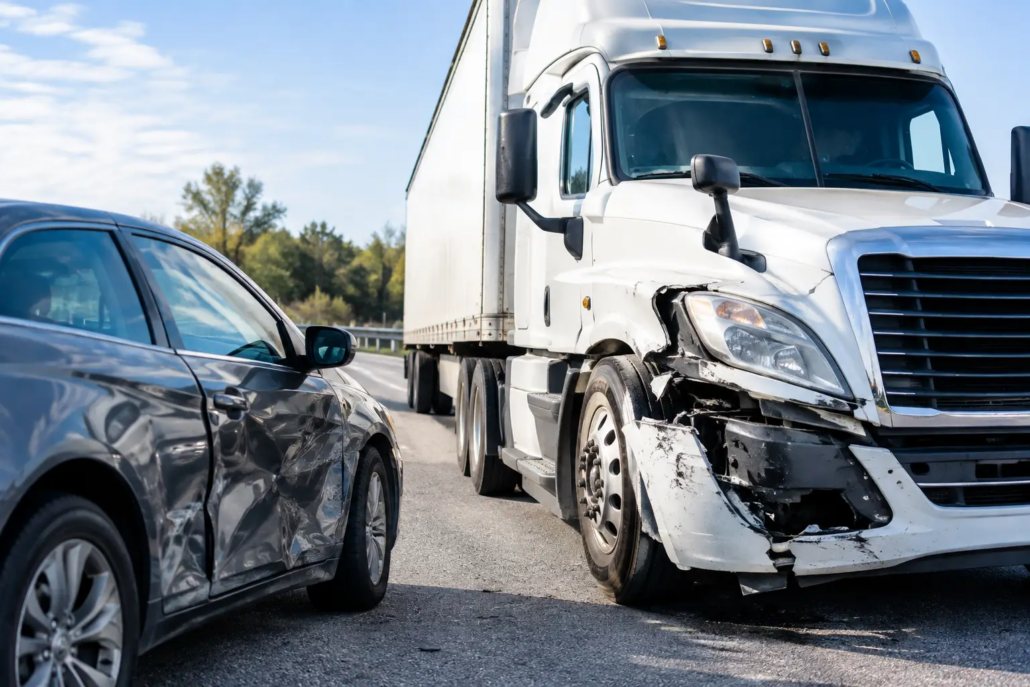
A crash with a semi-truck, delivery van, construction vehicle, bus, or company pickup can change a Michigan family’s life in seconds. Commercial vehicle claims are rarely as simple as exchanging insurance information and waiting for a check. The vehicle may be owned by one company, driven by an employee of another, leased through a third business, and insured under several policies.
For an injured person, the immediate priorities are medical care and stability. But evidence can disappear quickly after a commercial crash. The truck may be repaired, electronic data may be overwritten, surveillance footage may be deleted, and the company’s insurer may begin investigating before the injured person has even left the hospital.
Why commercial vehicle claims are different
A commercial driver may spend more hours on the road than a typical motorist, often while working under delivery deadlines, scheduling pressure, or company policies. Larger vehicles also create different dangers. A fully loaded tractor-trailer needs more distance to stop, has significant blind spots, and can cause catastrophic harm in a rear-end collision, lane-change crash, or intersection wreck.
The legal and insurance issues can be more complicated, too. A crash may involve the driver, the driver’s employer, the vehicle owner, a trucking company, a maintenance contractor, a cargo company, or another business that played a role in the trip. Determining who had responsibility requires more than accepting an early explanation from an insurance adjuster.
Michigan’s no-fault system adds another layer. An injured person may have access to Personal Injury Protection, or PIP, benefits for allowable medical expenses and certain wage-loss benefits, depending on the applicable insurance coverage and selections made under the policy. At the same time, a claim against the at-fault driver or business may be necessary to seek compensation for pain and suffering, excess economic loss, or wrongful death damages when Michigan law allows it.
What to do after a commercial vehicle crash
If emergency responders are at the scene, tell them about every injury and symptom, even if the pain seems manageable at first. Head trauma, neck injuries, internal injuries, and back injuries can become clearer in the hours and days after impact. Follow through with recommended medical care and keep records of appointments, restrictions, prescriptions, and out-of-pocket costs.
Report the collision to your own insurer promptly. Do not assume the commercial carrier’s insurance company will handle every benefit. Michigan coverage can depend on the household’s auto policies, policy coordination, the vehicle occupied, and other facts that need careful review.
Be careful when speaking with the commercial insurer. An adjuster may sound helpful while asking questions designed to narrow the claim, minimize injuries, or obtain a recorded statement before the full medical picture is known. You can provide basic claim information without guessing about fault, future treatment, or the extent of your recovery.
If you are able, preserve what you can. Useful evidence may include:
- Photos of vehicle damage, the roadway, skid marks, traffic signals, debris, and visible injuries
- The police report number, names of witnesses, and contact information for anyone who saw the crash
- Medical records, discharge instructions, work restrictions, bills, and proof of missed income
- Communications from insurers, the commercial driver, the driver’s employer, or any company involved
A family member can often help gather this information when an injury prevents the victim from doing so. Do not delay medical treatment or place yourself in danger to collect evidence at the scene.
Evidence can decide commercial vehicle claims
The first police report matters, but it is not always the final word on what happened. Commercial crashes often generate evidence that is not available after an ordinary passenger-car collision. Depending on the vehicle and circumstances, that may include dash camera footage, nearby business surveillance video, GPS location data, electronic logging records, dispatch messages, maintenance files, inspection records, load information, phone records, and vehicle event data.
That evidence can answer critical questions. Was the driver speeding or braking too late? Had the driver been on duty for an unsafe amount of time? Was the vehicle properly maintained? Did a company ignore known safety problems? Was a delivery driver distracted by a handheld device or pressured to meet an unreasonable deadline?
Not every case will involve every type of record. A local utility truck crash will be investigated differently from a multi-vehicle pileup involving a tractor-trailer on I-94, I-75, US-131, or M-10. Still, the underlying concern is the same: the party controlling key evidence should not be allowed to decide unilaterally what gets preserved.
Early legal review can help identify the businesses involved and send preservation requests before critical records are lost. This is particularly important after a fatal crash or a collision causing traumatic brain injury, spinal damage, amputations, severe fractures, or other life-altering injuries.
Fault may extend beyond the driver
A commercial driver who ran a red light, followed too closely, drove while distracted, or made an unsafe turn may be directly responsible for a crash. But the driver may not be the only responsible party.
A company may face questions about hiring, training, supervision, hours-of-service practices, maintenance, or whether it allowed an unsafe vehicle onto the road. In some cases, a defective part, improper repair, unsecured cargo, or negligent loading may have contributed to the collision. A careful investigation should follow the facts rather than settle for the quickest available target.
There are trade-offs in a broad investigation. More potential defendants can mean more insurance policies and a fuller path to compensation, but it can also mean more lawyers, insurers, and disputes over responsibility. That is why documentation and a clear timeline matter. The goal is not to make accusations without proof. It is to make sure every accountable party is identified before an injured person’s rights are compromised.
Understanding Michigan no-fault benefits after the crash
PIP benefits can be a financial lifeline after a serious commercial vehicle collision. They may help pay for allowable medical care, rehabilitation, attendant care, replacement services, and lost wages, subject to the policy and Michigan law. The correct source of PIP benefits is not always obvious, especially when a person was driving for work, riding in a rideshare, living in a household with multiple vehicles, or covered by more than one possible policy.
Insurers may request forms, medical authorizations, wage verification, and treatment documentation. Provide accurate information, but keep copies of everything submitted. A delay, denial, or request for extensive records does not automatically mean the insurer is right. Coverage disputes may arise over medical necessity, policy limits, coordination provisions, priority, or the relationship between the injured person and the vehicle involved.
Your treatment records should tell the real story of the injury. Missing appointments without explanation, stopping care because of transportation problems, or failing to report symptoms can create avoidable gaps. If getting to appointments is difficult, tell your provider and document the problem. Practical barriers should not erase the impact of a legitimate injury.
When a settlement offer is not enough
Commercial insurers often have significant resources and experience handling severe crashes. An early settlement offer may arrive when medical bills are mounting and income has stopped. It may be tempting, especially when a family is under pressure. But accepting a release can end the right to seek additional compensation later, even if surgery, long-term therapy, or permanent work restrictions become necessary.
The value of a claim depends on the facts: the severity and duration of injuries, available insurance coverage, proof of fault, lost income, future care needs, and whether the injury meets Michigan’s legal threshold for noneconomic damages. There is no honest one-size-fits-all number.
Before signing anything, injured people should understand what benefits are available, which claims may be released, and whether the proposed amount accounts for the full medical and financial consequences of the crash. A free consultation with a Michigan injury lawyer can provide that review without adding another bill to an already difficult situation.
After a commercial vehicle collision, the company and its insurer may move quickly to protect their interests. You deserve the same urgency. Neumann Law Group is available 24/7 to help injured Michigan residents preserve evidence, evaluate coverage, and take the next step while the facts can still be protected.


Leave a Reply
Want to join the discussion?Feel free to contribute!