Which Evidence Clarifies Shared Fault in Detroit Car Claims?
A Detroit collision can leave people with different accounts of what happened. One driver may say another turned across traffic; the other may point to speed, visibility, or a sudden maneuver. When more than one person’s conduct may have contributed, Michigan comparative fault can affect a car accident injury claim—but it does not answer every question about benefits, injury, or damages. Neumann helps readers understand how those issues fit together.
This guide explains how fault allocation works in broad terms, what evidence may clarify the sequence of events, and how to respond accurately when an insurer asks questions. It also explains why a person should not try to assign their own percentage of fault based on an incomplete view of the evidence. Michigan law and procedures can change, and the result in any claim depends on its facts.
How Michigan comparative fault may affect a Detroit car accident claim
Michigan uses comparative fault principles in many negligence claims. In general, a person’s share of responsibility can reduce recoverable damages. Michigan law also treats economic and noneconomic damages differently in some situations: a claimant’s fault can reduce economic damages, and a claimant whose fault is greater than the combined fault of the other at-fault parties may be barred from recovering noneconomic damages. How these rules apply depends on the claim and evidence, so this overview is not a calculation of anyone’s recovery.
A fault review may consider what each driver did before and during the collision. Relevant questions could include whether a driver had the right of way, changed lanes, followed too closely, or had time to react. The presence of more than one possible contributing act does not mean every person is equally responsible, and an initial account does not necessarily establish the final allocation.
Preserve evidence of the crash sequence
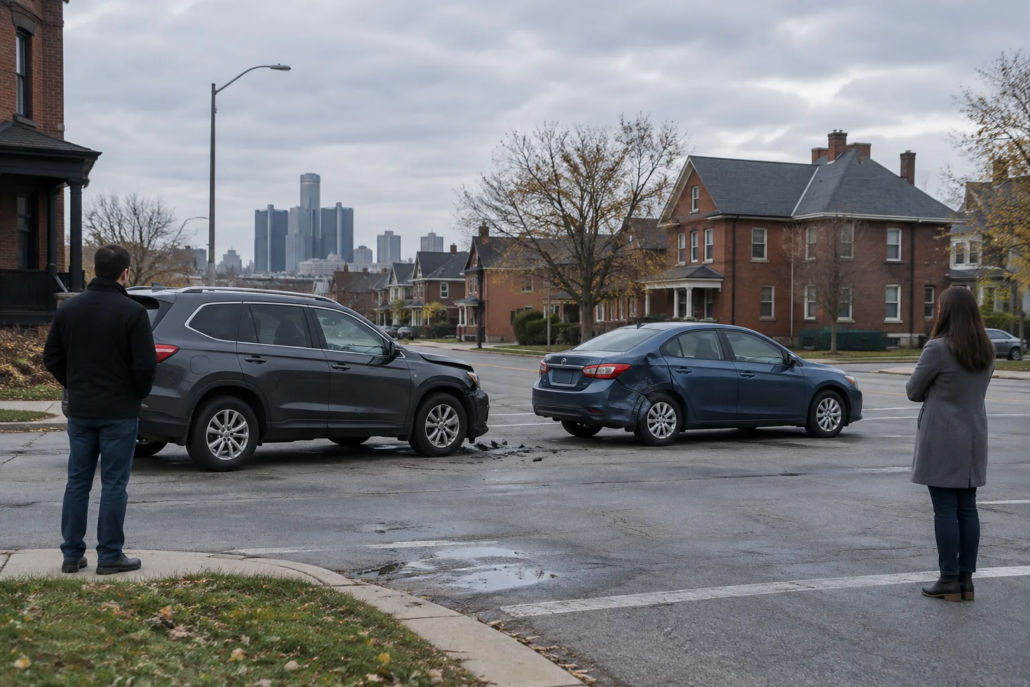
Photos of vehicle damage, road conditions, traffic controls, and the scene may help show where vehicles were and what could be seen. Witness names and contact details, available video, and records documenting when and where the collision occurred may also matter. In an intersection crash, for example, evidence that can clarify who had the traffic signal may help compare competing accounts. Evidence can disappear or become harder to locate, so preserving what is available early may be useful.
A person does not need to decide what percentage each driver bears. That is an evaluation made from the evidence and applicable law, not a conclusion that should be guessed from a single photo, conversation, or initial insurance form.
What evidence can show when drivers share fault in Detroit
Crash evidence is most useful when it helps reconstruct events rather than simply repeat a conclusion about blame. In a Detroit collision involving multiple vehicles, the location and severity of damage, debris, vehicle positions, witness observations, and available video may help explain the order of impacts. The same detail can support different interpretations, so evidence should be considered together rather than in isolation. See more about evidence in a Michigan crash involving several vehicles.
Insurers may ask for a recorded account, written statement, or other information. Accurate, careful communication matters. A person can separate what they personally remember from what they learned later, avoid guessing about speed or distance, and say when they do not know an answer. An incomplete memory is not the same as proof of fault. Statements made soon after a crash may be compared with other evidence, so precision is more helpful than speculation.
Detroit crash claims may involve records from local responders or other agencies, depending on the circumstances. If a lawsuit is filed, a Detroit matter may be heard in Wayne County Circuit Court, but the proper court and process depend on the claim, parties, and applicable rules. Not every insurance dispute becomes a lawsuit. Michigan’s rules may change, and local procedures can vary; a licensed attorney can explain how current requirements relate to a particular situation.
Shared fault and no-fault benefits are separate questions
Michigan’s no-fault system addresses certain first-party benefits, while a liability claim against another person involves different questions, including responsibility and the type of damages sought. A dispute about how a collision happened does not, by itself, determine whether an insurance policy may cover eligible no-fault benefits. For background, read about how Michigan no-fault insurance may cover crash-related medical bills.
Fault allocation does not prove injury or damages
Evidence about who contributed to a collision is only one part of an injury claim. A claimant may also need evidence connecting the crash to an injury and documenting the nature and effects of that injury. Medical records, information about care, and evidence of changes to daily activities may be relevant, depending on the claim. Fault evidence cannot, by itself, establish that an injury occurred or prove the amount of a loss.
For Michigan auto negligence claims, the legal requirements for recovering certain noneconomic damages can include a serious-impairment threshold. Whether that requirement applies and is met depends on the facts and current law. It is distinct from deciding what percentage of fault belongs to each person. Readers can review Michigan’s serious-impairment test for a Detroit injury claim for additional context.
Keep the questions distinct
It can help to organize a claim around separate issues, without trying to resolve them alone:
- How did the collision happen? Evidence may help establish the sequence and conduct of the people involved.
- Was someone legally responsible? This involves applying negligence and fault rules to the evidence.
- What injury and loss are supported? Records and other relevant information may help document the injury and its effects.
- Which benefits or damages may be available? The answer depends on Michigan law, insurance coverage, and the facts.
Keeping these questions separate can reduce confusion when an insurer focuses on one issue, such as a disputed maneuver, while the injury and benefit questions remain unresolved.
Frequently Asked Questions
Should I tell an insurer that I was partly at fault?
An insurer may ask for your account of the crash. In general, it is important to be accurate and not guess about details you do not remember. A person’s own impression is not necessarily a legal fault determination, and an early statement may not capture all available evidence. Depending on the circumstances, an attorney can explain how to respond to questions and what information may be relevant.
Can more than one driver be responsible for a Detroit crash?
Yes. The evidence may indicate that the conduct of more than one driver contributed to a collision. The roles and degree of responsibility are not necessarily equal, and they should not be assumed from the number of vehicles involved. Vehicle positions, impact sequence, witness accounts, and other available records may help explain what happened. The applicable Michigan rules and claim facts guide any fault allocation.
Does shared fault automatically end an injury claim?
Not necessarily. Under Michigan comparative fault principles, a claimant’s share of fault may affect damages, and the rules for economic and noneconomic damages differ. Other requirements can also matter, including proof of injury and, where applicable, the legal threshold for certain auto negligence damages. The effect of shared fault depends on the facts and the specific claim, so a general article cannot predict an individual result.
Does fault determine whether no-fault insurance pays benefits?
A liability dispute and eligibility for no-fault benefits are separate questions. Michigan no-fault coverage may provide certain benefits under applicable policy terms and legal requirements, regardless of how responsibility for the collision is ultimately allocated. Coverage and eligibility depend on the circumstances. An insurer’s decision about fault in a liability claim does not, by itself, answer every question about benefits.
How Neumann Can Help
Neumann is dedicated to helping injured people understand the issues that may shape a Michigan car accident claim. The firm can review available crash information, explain how evidence of more than one person’s conduct may be considered, and distinguish fault allocation from proof of injury, damages, and potential insurance benefits. No two claims are identical, and any evaluation depends on the facts and law that apply. If you were hurt in a Detroit crash and have questions about shared fault, contact Neumann to request a free consultation or case evaluation and discuss your circumstances.
The information in this article is for educational purposes only and does not constitute legal advice. Contact a qualified attorney authorized to practice in the jurisdiction that applies to your matter for advice specific to your situation.


Leave a Reply
Want to join the discussion?Feel free to contribute!