
What Is the Best Evidence for Tanker Crashes?
A tanker crash on I-75, I-94, US-131, or a two-lane road near Traverse City can change a family’s life in seconds. The best evidence for tanker crashes often disappears just as quickly. A damaged vehicle is towed away, the roadway is reopened, electronic trucking data may be overwritten, and insurance companies begin building their files before an injured person has even left the hospital.
Tanker collisions require especially careful investigation because the truck’s cargo can affect everything: how the vehicle handled, how far it needed to stop, whether the load shifted, whether a spill occurred, and how severe the injuries became. Early evidence can help establish what happened, who may be responsible, and what insurance coverage may be available.
Why tanker crash evidence is different
A tanker is not simply a large truck. It may be carrying gasoline, diesel fuel, milk, chemicals, propane, industrial materials, or other cargo. Liquid cargo can surge inside the tank during braking, turning, or evasive maneuvers. That movement can make a vehicle harder to control, particularly when a tanker is improperly loaded, traveling too fast for conditions, or making a sharp maneuver.
A crash may involve more than a driver and a trucking company. Depending on the facts, responsibility may also involve the motor carrier, the company that loaded the cargo, a maintenance provider, a broker, a vehicle manufacturer, or another motorist whose actions triggered the collision. Identifying every possible source of fault and coverage takes records that are rarely handed over voluntarily.
For a Michigan injury claim, evidence also matters because serious injuries may create disputes over no-fault benefits, available liability coverage, lost wages, and the full impact of a person’s injuries. The facts from the roadway and the facts from medical treatment must tell one clear, supported story.
The best evidence for tanker crashes starts at the scene
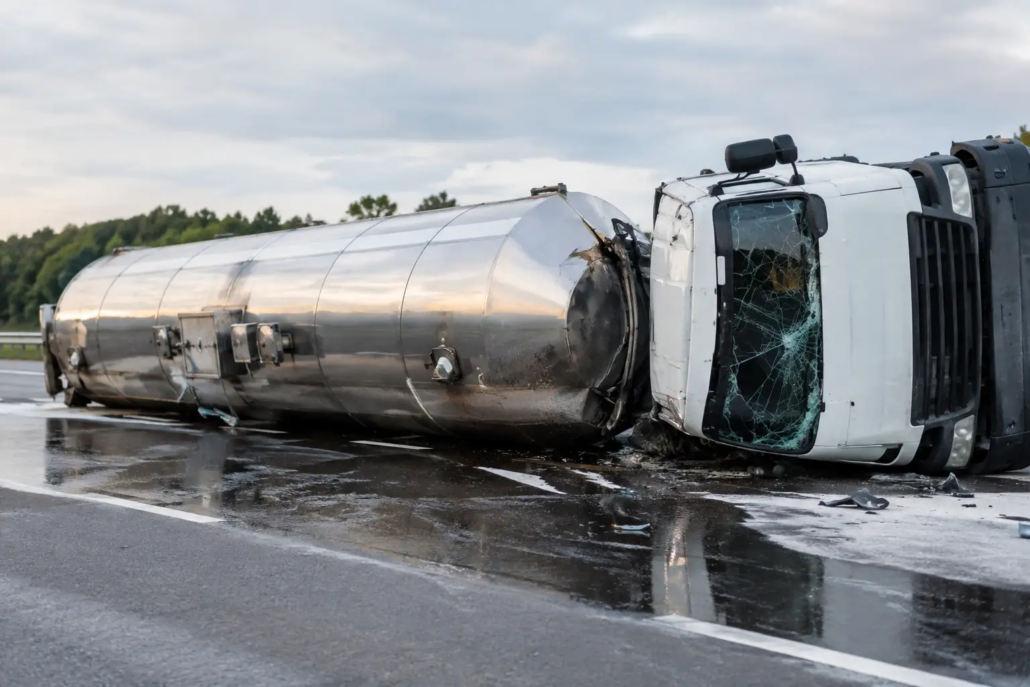
Photographs and video taken immediately after a collision can be among the most persuasive forms of evidence. They may show vehicle positions, crush damage, skid marks, debris fields, damaged guardrails, road conditions, traffic signals, lane markings, weather, and the tanker’s identifying markings.
A person should never put themselves in danger to collect evidence near leaking fuel, chemical vapor, fire, or active traffic. But if it is safe, a passenger, family member, or witness can preserve valuable details with a phone. Wide shots establish the overall scene; closer images can document impact points, tire damage, roadway debris, cargo placards, and the truck’s license plate and Department of Transportation number.
The police report is also important, but it is not the final word on fault. Officers often arrive after the impact, and a report may be based on limited witness statements or an incomplete view of the scene. It can provide a starting point for an investigation, identify involved parties, and record citations, but photographs, video, physical evidence, and truck records may reveal more.
Witness accounts can disappear fast
Independent witnesses may have no connection to either driver, which can make their observations especially meaningful. A witness may have seen a tanker drift across lanes, run a red light, follow too closely, make an unsafe turn, or react abruptly to another driver.
Names and contact information should be recorded as soon as possible. Surveillance video from nearby businesses, homes, gas stations, or intersections can be equally important, but many systems automatically record over footage within days or weeks. A prompt request to preserve it can make the difference between a clear answer and a permanent gap in the evidence.
Truck data can show what happened before impact
Commercial tankers commonly generate electronic information that can help reconstruct a collision. The specific records available depend on the truck, carrier, and equipment, but they may include electronic logging device records, GPS location information, engine control module data, speed information, braking activity, hard-braking alerts, and driver communications.
This evidence can test claims that a driver was traveling at a safe speed, had adequate rest, or reacted properly. It can also reveal whether a driver exceeded hours-of-service limits, took an unexpected route, or was using the vehicle at a time inconsistent with the carrier’s account.
A truck’s event data may be overwritten through normal operation, repairs, or post-crash handling. That is why an early preservation letter is often critical. It puts the carrier and other responsible parties on notice to retain the truck, electronic data, inspection materials, video, dispatch records, and related documents rather than allowing them to be altered or destroyed.
Driver, maintenance, and loading records matter
The driver’s qualification file may show whether the carrier properly screened, trained, and supervised the person operating the tanker. Prior safety violations, inadequate training, licensing problems, or a history of crashes can be relevant in some cases.
Maintenance records can reveal worn brakes, tire problems, lighting defects, steering issues, or missed inspections. A tanker’s safe operation also depends on the condition of its valves, tank structure, coupling equipment, and safety systems.
Cargo documents are another major piece of the puzzle. Bills of lading, load tickets, hazardous-materials paperwork, tank inspection records, and loading procedures may establish what the tanker carried, how much it weighed, whether it was properly secured, and whether the load was compatible with safe operation. When a cargo spill or fire occurs, emergency-response records can document the hazard and the conditions responders encountered.
Medical evidence proves more than an emergency-room visit
In a tanker collision, the injury claim cannot rest only on pictures of a destroyed vehicle. Medical records show how the crash affected a real person’s body, work, independence, and daily life.
Emergency treatment, ambulance records, diagnostic imaging, surgical reports, physical therapy notes, medication records, and follow-up visits all help document the progression of injuries. Consistent treatment is often important because insurers may argue that a delay in care means an injury was not caused by the crash or was not serious.
Some symptoms are not immediately obvious. Traumatic brain injuries, neck and back injuries, nerve damage, post-traumatic stress, and chronic pain may become clearer over time. Victims should report symptoms accurately to medical providers, attend recommended appointments when possible, and keep records of out-of-pocket costs, missed work, and the ways pain or limitations affect everyday activities.
Michigan no-fault benefits can include allowable medical expenses and certain wage-loss benefits, subject to the facts of the case and applicable coverage. Claims can become complicated when more than one household or vehicle insurance policy may apply, when coverage is disputed, or when an insurer delays or denies benefits. The insurance information gathered after a crash should include every potentially relevant policy, not just the policy for the vehicle involved.
What injured Michigan families should do now
The hours after a serious tanker crash are not the time to negotiate with a trucking insurer or provide a recorded statement without understanding the consequences. The immediate priority is medical care and safety. After that, preserve what you can.
Keep photographs, videos, damaged personal property, discharge papers, medical bills, correspondence from insurers, claim numbers, and the names of all responding agencies. Do not post detailed crash discussions, medical updates, or opinions about fault on social media. A casual post can be taken out of context later.
Do not assume a settlement offer reflects the full value of a claim, especially when treatment is ongoing or a tanker company’s investigation is still developing. Commercial carriers and their insurers may move quickly to protect their interests. Injured people deserve the same urgency in protecting their evidence, benefits, and legal rights.
A prompt legal review can help preserve truck and cargo records, identify available insurance coverage, and address Michigan PIP issues before delays create avoidable problems. Neumann Law Group offers free consultations and is available 24/7 for Michigan families facing the aftermath of a serious commercial vehicle crash. The most useful next step is often simply acting before critical proof is gone.


Leave a Reply
Want to join the discussion?Feel free to contribute!