
What Can Shape a Traverse City Deer-Avoidance Injury Claim?
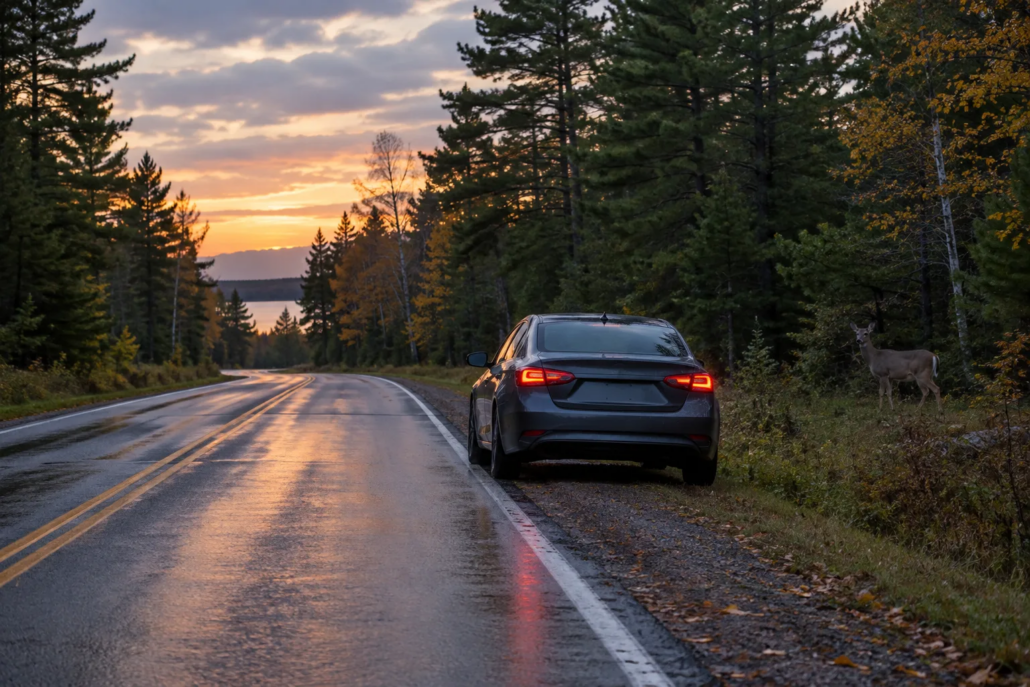
A driver traveling a Northern Michigan road at dusk may see a deer step into the lane and swerve, then strike a tree, another vehicle, or a guardrail. A deer accident injury claim in Michigan can raise questions even when the vehicle never touches the animal: what caused the crash, whether the maneuver was reasonable in the circumstances, and what insurance may apply. In and around Traverse City, changing light, road conditions, and limited time to react can all be relevant facts—not automatic proof of fault. Neumann helps people understand how the evidence may fit together. This article explains what drivers and passengers can document, how physical contact differs from fault and coverage questions, and why clear records can matter after an evasive maneuver. The details of each crash are different, so no single fact determines every claim.
How a Michigan deer accident injury claim may be evaluated
A crash does not become irrelevant to an injury claim simply because the deer escaped without being hit. The central questions may include what prompted the maneuver, what happened next, and whether another person’s conduct contributed to the collision or injury. A driver’s decision to avoid an animal is not automatically careless; the circumstances, available time, speed, visibility, and road surface may all matter.
Contact, conduct, and causation are separate questions
Physical contact can help establish that a deer was present, but its absence does not by itself settle what caused the crash. A driver or passenger may describe the animal’s movement, while vehicle damage, tire marks, debris, nearby cameras, and independent witnesses may help corroborate the sequence. An insurer or other decision-maker may also consider whether a driver’s response was reasonable under the conditions known at the time.
Michigan’s comparative-fault rules may affect a fault-based claim if the injured person’s conduct is disputed. The effect depends on the type of damages and the facts; an attorney can explain how current Michigan law may apply. A single-vehicle crash, for example, does not automatically establish that the driver alone caused every injury or loss.
What to document after swerving to avoid a deer
Once people are safe and any urgent needs are addressed, useful evidence can be temporary. In Traverse City and elsewhere in Northern Michigan, weather, traffic, daylight, and changing road conditions may make a scene look different soon afterward. Do not put yourself or anyone else in danger to collect evidence; safe, lawful documentation is the priority.
If it is safe to do so, consider recording:
- The vehicle’s final position and its direction of travel, along with the roadway, shoulder, curves, and nearby intersections.
- Weather, lighting, visibility, the condition of the pavement, standing water, snow, ice, gravel, or other hazards.
- The area where the deer appeared, any visible tracks or debris, and nearby deer-crossing signs or obstructions to the driver’s view.
- Damage to every involved vehicle and any marks on roadside objects that may help show the vehicle’s path.
- Names and contact details for witnesses, plus what each person says they observed. Keep observations separate from guesses about what happened.
For more guidance, see these photos that preserve important accident-claim evidence. Note the time and location as accurately as possible, and keep original photos and videos rather than relying only on edited or cropped copies. If law enforcement responds, record the agency and any report information available; an officer’s report is one source of information, not necessarily the only evidence.
Preserve vehicle, injury, and communication records
Photograph vehicle damage from several angles before repairs when practical, and keep estimates, invoices, towing records, and communications about a repair or total-loss decision. This can help preserve a record of the impact even if there was no deer contact. See more about documenting vehicle damage after a Michigan crash.
Drivers and passengers should also keep copies of insurance notices, claim numbers, adjuster messages, and any written account they provide. Make a factual note of what was said and when. If you do not know an answer, avoid guessing; later details can be clarified as more information becomes available.
Separate injury benefits from fault and coverage questions
Michigan no-fault insurance can raise questions distinct from who caused a crash. Personal Protection Insurance (PIP) benefits and a potential claim against another at-fault party are not interchangeable. A person may need to determine which policy could provide applicable benefits even when the driver swerved to avoid a deer and no vehicle struck the animal. The specific coverage and claim issues depend on the policy, the people involved, and current Michigan law. This overview explains how Michigan no-fault insurance may pay crash-related medical bills.
For passengers, identifying potentially relevant policies may take additional care. The vehicle owner’s insurance, household relationships, and other coverage information may matter under Michigan’s PIP priority rules. A passenger should not assume that the driver’s policy is the only possible source of benefits. This resource discusses Michigan’s PIP priority rules for injured passengers.
A careful record can also help keep the facts consistent across an incident report, insurance communications, and medical records. In Grand Traverse County, as elsewhere in Michigan, the correct analysis depends on the actual policy language and circumstances—not simply the fact that the crash involved a deer or happened on a rural road. Laws and insurance rules can change, so case-specific questions call for current guidance from a Michigan-licensed attorney.
Practical steps and common documentation gaps
People may overlook evidence because a crash feels straightforward at first. Yet a single-vehicle crash after an evasive maneuver can leave unanswered questions about the animal, road, timing, and sequence of impacts. A calm, organized record can help clarify what is known and what remains uncertain.
Some common gaps to avoid include:
- Waiting too long to record the scene. Weather, traffic, and cleanup can change or remove useful details. Photograph only when it is safe.
- Discarding repair information. Keep photographs, repair estimates, receipts, and relevant communications before or during repairs.
- Treating an assumption as a fact. Distinguish what you saw from what you inferred, and do not guess in an insurance conversation.
- Overlooking passenger evidence. Passengers may have a different view of the event and separate insurance questions. Record their observations and identify potentially relevant policies.
- Ignoring symptoms or failing to keep records. A person may not immediately understand the extent of an injury. For general information on why prompt medical evaluation matters after a motor vehicle crash, see our related article. Keep records of care and describe symptoms accurately to the medical professional.
These steps do not decide fault or guarantee coverage. They help preserve information that may otherwise be difficult to reconstruct when an insurer evaluates a Northern Michigan car accident claim.
Frequently Asked Questions
Can I have an injury claim if my car did not hit the deer?
Possibly. The absence of contact with the deer does not, by itself, decide whether an injury claim exists. Relevant questions may include how the evasive maneuver occurred, what caused the vehicle to leave its path or collide with something else, and what insurance applies. The evidence and the circumstances of each crash matter, so a general answer cannot predict the result of a specific claim.
Does swerving to avoid a deer automatically make a driver at fault?
No single fact automatically resolves fault. The driver’s response may be considered alongside speed, visibility, road conditions, available time, and other conduct that contributed to the crash. Michigan comparative-fault rules may affect certain claims when responsibility is disputed. A decision-maker’s analysis depends on the evidence and the claim involved, rather than simply whether the driver swerved.
What if there were no witnesses and no deer was hit?
Other evidence may still help explain the event. Photos, vehicle damage, roadway conditions, debris, nearby video, passenger observations, and records created soon after the crash may help establish a timeline. None is necessarily conclusive on its own. In Traverse City, as elsewhere, evidence should be gathered safely and kept in its original form when possible.
Can a passenger make an insurance claim after a deer-avoidance crash?
A passenger may have insurance questions even when the driver’s actions are disputed. Michigan PIP priority rules can affect which policy is considered, and the answer may depend on the passenger’s circumstances, the vehicle, and available coverage. A passenger’s injury claim and a driver’s potential fault-based claim are separate issues. A Michigan-licensed attorney can review the relevant facts and policies.
How Neumann Can Help
Neumann is dedicated to helping injured people understand the evidence and insurance questions that can arise after a deer-avoidance crash. The firm can review the available records, discuss how driver conduct, causation, and coverage may relate to the situation, and explain potential next steps without promising a particular result. If you were injured in or near Traverse City, contact Neumann to request a free case evaluation and discuss your circumstances with the team.
The information in this article is for educational purposes only and does not constitute legal advice. Laws vary by location and may change; contact an attorney licensed to practice in Michigan for advice specific to your situation.

Leave a Reply
Want to join the discussion?Feel free to contribute!