
Could Work and Crash Records Guide a Detroit Injury Claim?
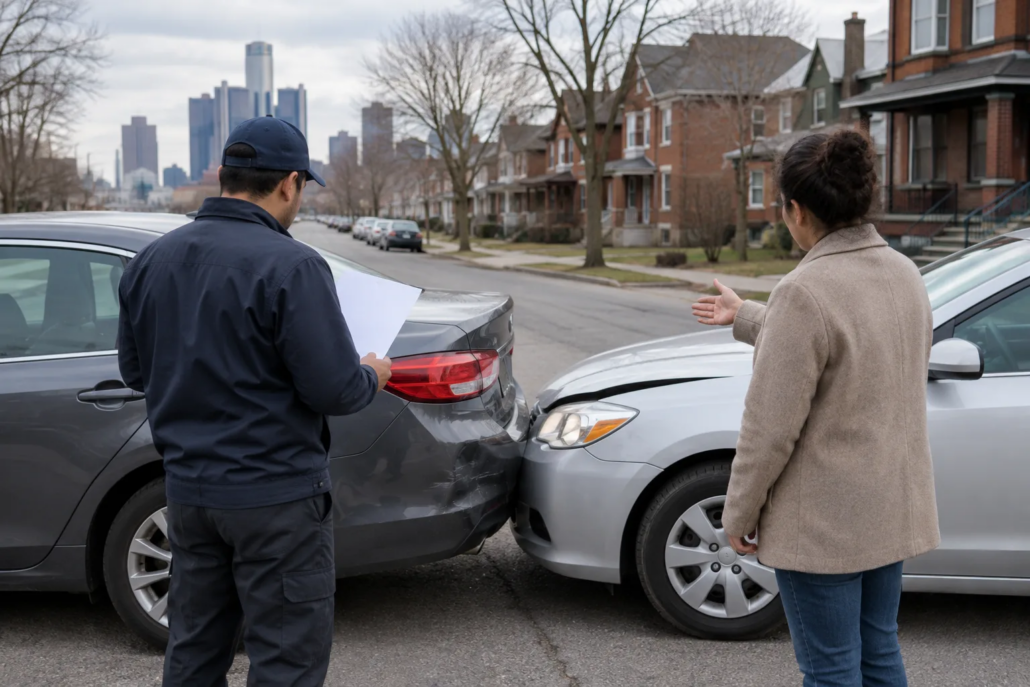
A delivery driver, field technician, or employee traveling between work locations may be hurt when another vehicle collides with theirs. After a crash, it can be hard to tell whether the only issue is a workers’ compensation claim or whether an additional claim may be possible. A Michigan work-related car accident injury claim can involve both tracks, but each asks different questions and may require different records. Neumann helps Detroit-area readers understand how those issues can fit together and what information may be useful to keep organized. This article covers how the claims differ, which contacts and documents may matter, and common coordination issues. Whether another driver or entity contributed, the facts and available coverage will shape the options; having clear records can help each relevant claims contact evaluate the situation.
How a Michigan work-related car accident injury claim can involve two tracks
Workers’ compensation generally addresses an employee’s work-related injury, subject to Michigan eligibility rules. A claim may arise when an employee is hurt while performing job duties or traveling for work, though the details matter. The employer and its workers’ compensation insurer may need information about the incident, the injury, and any time away from work. Reporting a crash to a supervisor and opening a workers’ compensation claim do not, by themselves, resolve whether another party may also be legally responsible.
A separate third-party negligence claim may be considered when a person or entity other than the employer contributed to the collision. For example, another driver’s conduct may be relevant; in some situations, facts about a vehicle or work assignment may also prompt questions about other potentially responsible parties. A third-party claim is not automatic. It depends on evidence, applicable legal standards, and the relationship between the parties. The workers’ compensation and negligence tracks can proceed separately, while payments and any later recovery may interact under Michigan law. A related explanation of a Detroit work injury with a possible third-party claim discusses that distinction in a construction context; it is an analogy, not an assumption that a car crash happened at a construction site.
Keep the benefit questions separate
Workers’ compensation and a third-party case do not ask exactly the same questions. One concerns whether the injury is work-related and covered; the other generally examines whether another party’s negligence caused legally recognized harm. A person may have reason to explore both, but qualifying for one does not establish liability in the other. In Detroit, a worker may be communicating with an employer, a workers’ compensation claims administrator, and one or more auto insurers at the same time.
Which records and contacts may help clarify both claims?
A clear timeline can help prevent gaps or conflicting descriptions. Keep copies of records and note when, and to whom, information was provided. Depending on the circumstances, useful materials may include:
- Employer incident reports, work schedules, dispatch instructions, and communications about the assignment or route.
- Workers’ compensation claim notices, benefit decisions, requests for information, and correspondence with the adjuster or claims administrator.
- Police crash reports, photographs, witness contact information, and details exchanged with other drivers.
- Medical bills and records, work-status documentation, and records of missed work. These documents can help explain the claim history; medical questions should be addressed by qualified healthcare professionals.
- Auto insurance policy information, claim numbers, and letters or emails from insurers.
For a Detroit collision, the crash report may be available through the law enforcement agency or other applicable reporting channel. Availability and procedures depend on the report and agency. Witness accounts, vehicle damage photographs, and any available intersection or signal evidence may also help explain how the crash happened. See this overview of evidence that can clarify fault in a Michigan intersection crash for examples of evidence that may be relevant.
Keep benefit paperwork and auto-insurance communications together, but do not assume one insurer’s decision settles every issue. Michigan no-fault coverage may raise separate questions about medical expenses and wage loss, depending on the facts and applicable coverage. A review of Michigan no-fault wage-loss benefits after a crash can help distinguish that topic from workers’ compensation. Similarly, retaining bills, benefit notices, and insurer correspondence may help when asking about Michigan no-fault medical benefits after a car accident. Eligibility and coordination can depend on the circumstances, so avoid assuming that one claim automatically pays every expense.
What legal and coordination issues should a worker understand?
A third-party auto claim may involve issues that do not determine workers’ compensation eligibility. Michigan’s no-fault system generally limits when an injured person may recover noneconomic damages from another driver; a serious-impairment threshold may apply, subject to the facts and law. That is a distinct analysis from whether an injury is work-related. This resource explains Michigan’s serious-impairment test for a Detroit injury claim. Not every work crash will meet the requirements for a third-party claim, and a legal review may be needed to assess the available evidence.
Workers’ compensation payments and a third-party recovery may also raise reimbursement or lien questions. The rules can depend on the type of benefits paid, the claim’s resolution, and the applicable law. That is one reason to keep payment histories and settlement-related communications organized and to ask how the two tracks may affect each other before making decisions.
If the other driver’s insurance information is missing, disputed, or indicates no coverage, the available options may depend on the injured person’s own policies and other facts. Keep any information exchanged at the scene and policy documents that may apply. A discussion of Michigan uninsured-motorist coverage after a Detroit crash offers background on that separate coverage question.
For Detroit workers, possible contacts may include the employer, the workers’ compensation claims administrator, the relevant auto insurers, and the agency or law enforcement office handling a report. The Michigan Workers’ Disability Compensation Agency provides information about the state’s workers’ compensation system. Where a civil lawsuit is filed, the appropriate court depends on jurisdiction and the case; Wayne County Circuit Court may handle some civil matters, but it is not the venue for every claim. Keep communications factual and consistent, and preserve copies rather than relying on memory alone.
Frequently Asked Questions
Does a crash while driving between work locations count as work-related?
It may, but the answer depends on the employee’s duties, the reason for the trip, and the circumstances of the crash. A commute from home is not necessarily treated the same as travel between job locations or travel required by an employer. In Michigan, the workers’ compensation analysis is fact-specific. Employer instructions, schedules, dispatch records, and the purpose of the trip may help explain why the employee was on the road.
Should I tell my employer if I already reported the crash to the police?
Police reporting and workplace reporting serve different purposes. A police report documents aspects of the collision, while an employer report can provide notice of a possible work-related injury and preserve information about the job assignment. Requirements and timelines may depend on the circumstances and applicable Michigan rules. Keeping a copy of each report and noting when it was submitted can help create a more complete record.
Can I receive workers’ compensation and no-fault benefits at the same time?
More than one benefits system may be relevant after an on-the-job crash, but that does not mean the same expense or wage loss will be paid twice. Eligibility, priority, coordination, and reimbursement questions can depend on the facts, policy terms, and Michigan law. Keep notices and payment records from each claims administrator, and consider getting advice about how the particular benefits may interact.
What if my employer says the crash was not part of my job?
A disagreement about whether travel was work-related may require a closer look at the facts and records. Relevant materials can include work schedules, messages about the assignment, route or dispatch information, and the employer’s incident report. In Michigan, a worker’s eligibility is not determined solely by a label in a conversation. A qualified attorney can review the circumstances and explain possible options without assuming that a claim will be accepted.
How Neumann Can Help
Neumann is dedicated to helping injured people understand the separate questions that can arise after a work-related Detroit crash. The firm can review available employer records, workers’ compensation communications, crash documentation, and insurance information to help identify issues that may require attention. A consultation can also help clarify how a possible third-party claim differs from benefit claims and what additional information may be useful. Every situation depends on its facts, and no particular outcome can be promised. Contact Neumann to request a free consultation or case evaluation and discuss your circumstances.
Michigan law can change, and laws may vary by location. The information in this article is for educational purposes only and does not constitute legal advice. Contact a qualified attorney authorized to practice in the jurisdiction that applies to your matter for advice specific to your situation.


Leave a Reply
Want to join the discussion?Feel free to contribute!