
Can a Grand Rapids Business Be Liable for an Icy Lot Fall?
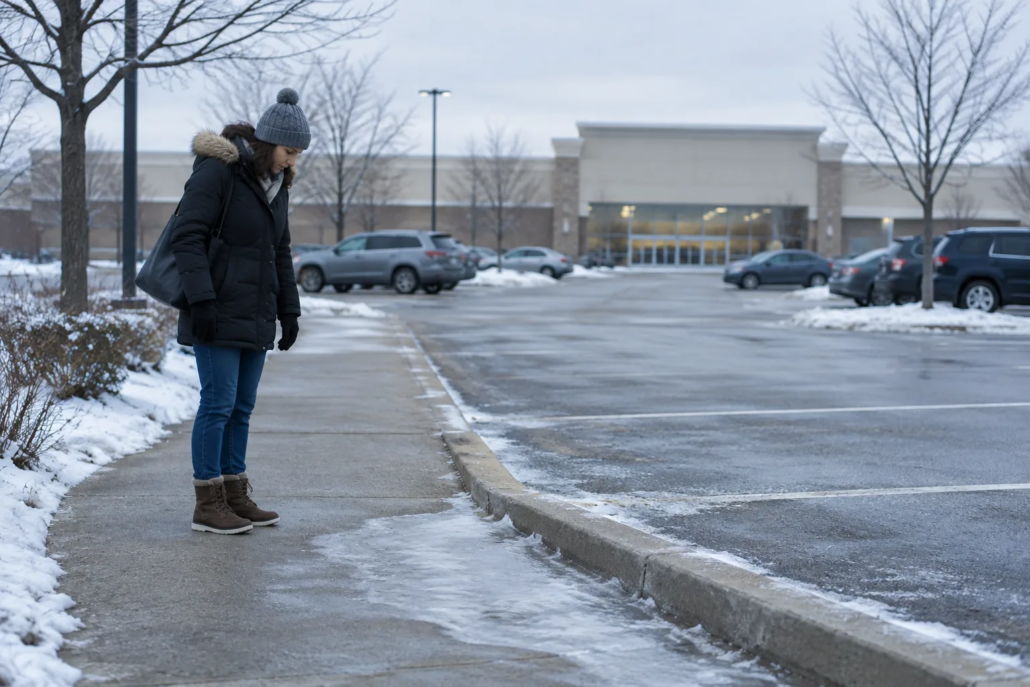
A parking lot can look safe from a car window, then turn slick underfoot where meltwater refreezes near a curb, walkway, or entrance. After an icy fall, an injured visitor may wonder whether the business, property owner, or a maintenance company was responsible. Someone looking for a Grand Rapids icy parking lot slip and fall lawyer may first need a clearer picture of what happened and who controlled the area. Neumann helps people understand the questions that can arise in a premises-liability review.
Responsibility is not automatic just because a fall happened on commercial property. In Michigan, the facts may include who maintained the lot, whether anyone knew or should have known about the ice, the weather and visibility, and what steps were taken to inspect or treat the area. This guide explains how those issues may be evaluated and offers practical ways to preserve information after a Grand Rapids winter fall injury. It is general information, not a prediction about any particular claim.
Who Controlled the Grand Rapids Parking Lot and Its Maintenance?
The first question may be who had responsibility for the specific part of the lot where the fall occurred. A store may own its parking area, lease space in a larger complex, share access with neighboring businesses, or rely on an outside company for snow and ice work. The business name on the storefront does not, by itself, establish who controlled every parking space or walkway.
Control and maintenance arrangements may be relevant because a premises-liability evaluation can consider who had the ability and responsibility to inspect, treat, repair, or warn about a hazard. A property owner, tenant, property manager, or snow-removal contractor may have different roles. A Michigan Appeals Court’s Applebee’s slip-and-fall decision illustrates that a commercial setting does not settle the question of responsibility; the facts and evidence still matter.
After a fall, note the exact location: a marked parking space, the route to an entrance, a ramp, or an area near a drain. If you can do so safely, record the business or property name and the names of any property manager or maintenance company shown on available materials. Avoid assuming a particular party is responsible before the relevant arrangements are understood.
What can help identify control?
Useful details may include where the lot begins and ends, whether the area is shared, who directed snow removal, and whether staff responded to a report. Photos of the area and notes about conversations can help preserve these observations while they are fresh.
How Notice of Ice and Winter Conditions May Affect a Claim
In Michigan, whether a responsible party knew or should have known about a dangerous condition can be an important issue. Evidence may help establish when the ice formed, how long it remained, whether anyone reported it, and whether a reasonable inspection or maintenance practice might have identified it. A fall alone does not establish that a business had notice.
Record the date and approximate time of the fall, recent and current weather, temperature if known, and whether precipitation or melting had occurred. Describe the surface: was the ice a visible patch, a thin sheen, or an area that looked wet? Note lighting, shadows, nearby roof runoff, drainage, foot traffic, and whether surrounding pavement appeared treated. If practical and safe, photograph the hazard from several angles and include nearby landmarks to show its location. Do not put yourself at risk to take pictures.
A Michigan appellate ruling on notice of a dangerous condition illustrates why evidence about notice can matter. The decision is not a forecast for another case. Inspection records, snow-removal logs, incident reports, weather information, and witness accounts may help provide context, but what they show depends on the circumstances.
Why the type and visibility of ice matter
Black ice can be difficult to distinguish from wet pavement, while other icy patches may be plainly visible. Michigan courts may consider the condition’s visibility and the surrounding circumstances under applicable premises-liability rules. A Michigan black-ice slip-and-fall appeal is one example of a court evaluating an icy condition; it does not mean every black-ice claim will be decided the same way.
What to Report and Preserve After a Grand Rapids Winter Fall
A prompt, factual report can help create a record of when and where the fall occurred. If you are able, tell the business or property representative what happened and ask how the incident is documented. Keep a copy or note the details of any report, including when it was made and to whom. Reporting does not require you to decide who was legally at fault.
Consider preserving the following information when it is safe and appropriate:
- Photographs or video: Capture the surface, lighting, nearby drainage or roof edges, warning signs, and the route you were using. If the ice later melts or is treated, your original images may preserve how the area looked.
- Weather and timing: Write down the approximate time, recent precipitation, temperature if available, and any changes in conditions you observed.
- Witness details: Ask willing witnesses for names and contact information. Note what each person saw, without asking anyone to guess or adopt your version of events.
- Medical and expense records: Keep relevant visit summaries, bills, and receipts. A lawyer can help assess what information may be relevant to an injury claim; do not delay necessary medical care to gather evidence.
- Communications: Save messages or correspondence about the incident, and make a record of conversations with business staff or property representatives.
These records can help an attorney evaluate the event, the parties involved, and the possible connection between the fall and the reported injury. In Kent County, a claim may involve Michigan law and local court procedures if litigation becomes necessary; the appropriate process depends on the facts. Deadlines and legal rules can vary, so a timely review may help clarify options without assuming a lawsuit is required.
Frequently Asked Questions
Should I report an icy fall to the business even if I am unsure who was responsible?
A factual report may help preserve when and where the incident occurred. If possible, note the person who received it, the time, and any incident-report reference or copy provided. You do not need to identify a legally responsible party when reporting what happened. If you are unable to report immediately, keep your own dated notes and consider asking a lawyer how reporting or record preservation may apply to your circumstances.
What if the ice melted before I could take photographs?
Other information may still help document the conditions. Write down what the surface looked like, the location, lighting, weather, and approximate time, and identify anyone who saw the area or the fall. Nearby cameras may have recorded the lot, but footage can be overwritten under a business’s retention practices. An attorney can discuss whether any preservation request is appropriate based on the facts and timing.
Can a business be responsible if a snow-removal contractor treated the lot?
A contract with a maintenance company does not, by itself, answer who may be responsible. The agreement, the parties’ actual roles, control over the area, and what each party knew or did may matter. A review may also consider whether the hazard arose after work was performed. The relevant facts and Michigan law determine how those responsibilities are evaluated in a particular situation.
Does a fall on visible ice automatically prevent an injury claim in Michigan?
Not necessarily. Ice visibility can be significant in a Michigan premises-liability analysis, but the circumstances matter, and legal rules may include fact-specific exceptions or other considerations. A person’s own conduct may also be relevant. Because outcomes cannot be determined from one detail alone, an attorney can review the location, photographs, weather, maintenance information, and other evidence before discussing possible options.
How Neumann Can Help
Neumann is dedicated to helping injured people understand the issues that may arise after a fall on commercial property. A review may consider who controlled the parking area, what evidence could show notice of ice, how weather and maintenance practices fit into the timeline, and what records may help explain the injury. The firm can also discuss questions about documentation, potential parties, and Michigan premises-liability principles without assuming the outcome.
If you fell in a Grand Rapids business parking lot, contact Neumann to request a free consultation and discuss whether the circumstances may warrant further review. A conversation can help you understand potential next steps based on your situation.
Disclaimer: This article is for educational purposes only and does not constitute legal advice. Laws vary by location and may change; contact an attorney licensed in Michigan for advice specific to your situation.

Leave a Reply
Want to join the discussion?Feel free to contribute!