
Where Can Detroit Motorcycle Passengers Find Claim Evidence?
A passenger on a motorcycle may have little control over how a crash unfolds, but can still face injuries, medical visits, and questions about who may be responsible. If you were hurt, you may wonder whether you can bring a Detroit motorcycle passenger accident claim, even if the rider was a friend or family member. The answer depends on the crash facts, applicable Michigan insurance rules, and the available evidence. Neumann helps injured people understand the issues that may matter when evaluating a claim. This article explains possible claim types and insurance sources, what to record and collect—including details about the motorcycle and other vehicles—and how the rider’s or another driver’s conduct may factor into the analysis. It also outlines why medical and witness records can be useful. Michigan rules and claim requirements can change, and individual circumstances matter, so general information cannot determine the outcome of a particular situation.
Can a Detroit motorcycle passenger bring an injury claim?
Generally, an injured passenger may be able to pursue a claim if another person’s legally actionable conduct caused or contributed to the crash and the passenger suffered an injury. Depending on the facts, that person could be the motorcycle rider, the driver of another vehicle, or more than one person. Being a passenger does not by itself establish who was at fault or which insurance applies.
A passenger may also have questions about Personal Injury Protection (PIP) benefits. Michigan’s no-fault insurance system can involve specific rules about whether a crash involved a motor vehicle, which policies may be in the priority order, and whether the passenger qualifies for benefits. A motorcycle policy and an auto policy may not provide the same benefits, and coverage depends on the facts and policy terms. For a broader explanation, see Michigan PIP benefits available to injured passengers.
A PIP claim and a liability claim are not the same. PIP may cover certain allowable expenses or wage loss when the passenger is eligible, subject to Michigan rules and limits. A liability claim, by contrast, focuses on whether someone’s conduct caused the injury and what damages may be legally recoverable. An attorney can assess how the available coverage and claim options fit the particular circumstances.
What should a passenger collect after a Detroit motorcycle crash?
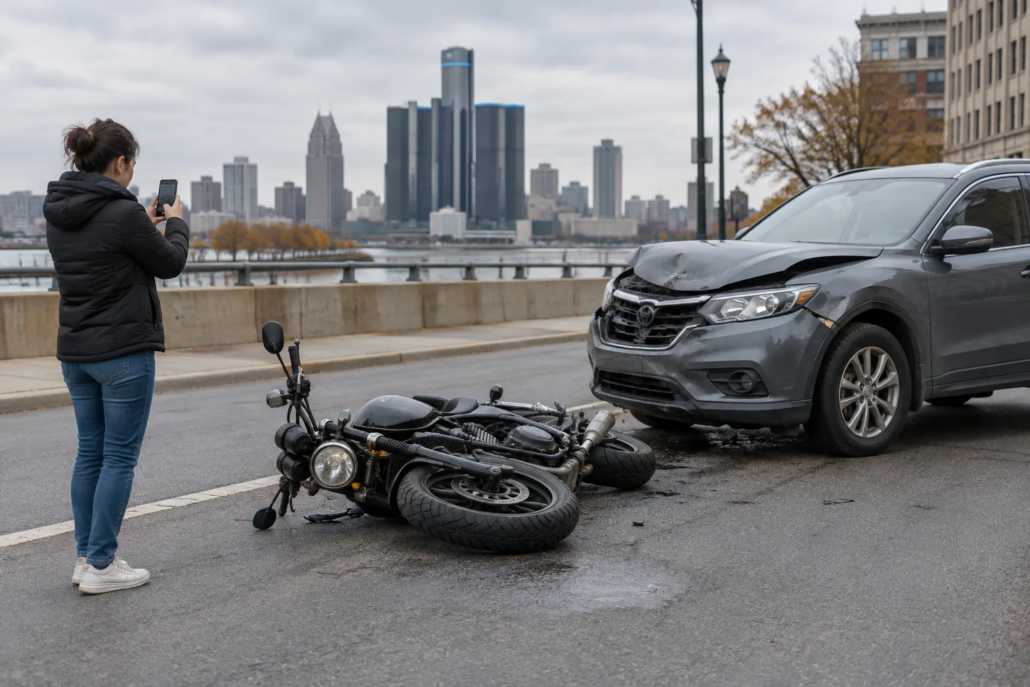
If it is safe and practical, preserve details about the scene and the people and vehicles involved. A passenger may be shaken or need immediate care, so collecting information can be handled by someone else when necessary. Do not put yourself at risk to take photographs or obtain records.
Useful information may include:
- The motorcycle’s make, model, color, and license plate, along with the rider’s name and contact information.
- Each other vehicle’s description, plate, driver’s contact information, and available insurance information. Record the insurer and policy details if they are provided; do not assume that a card proves coverage for this crash.
- Photographs of vehicle damage, final positions, visible road conditions, and the broader scene, if safe to take. Note the time and location and keep any available crash-report information.
- Witness names and reliable contact details, plus a brief note about what each person says they observed.
These details can help distinguish the motorcycle from other vehicles and preserve information that may be harder to locate later. For more on motorcycle insurance information to collect after a crash, see the related guide. When several vehicles may be involved, evidence from a crash involving multiple vehicles can help organize the facts without assuming who caused the collision.
Medical records are another important part of the picture. Seek appropriate medical attention, describe symptoms to the provider, and keep visit summaries, bills, and related correspondence. Symptoms may not all be apparent at the scene; records can document when concerns arose and what care was provided. This overview discusses prompt medical care and injury documentation after a crash.
How can the rider’s or another driver’s conduct affect a claim?
A claim review may consider how each person involved acted before and during the crash. For example, investigators may examine the direction and timing of travel, whether a vehicle changed lanes or turned, road and traffic conditions, and what witnesses or available records show. The rider’s conduct can be relevant, but so can the actions of another driver. The fact that a passenger rode on the motorcycle does not, by itself, answer the question of fault.
Michigan’s comparative-fault rules may affect how responsibility is evaluated and what damages may be recoverable. How those rules apply depends on the claim and evidence. A passenger’s own conduct may also be considered if it is legally relevant, but fault should not be assumed merely because the person was riding as a passenger. How shared fault can affect a Detroit injury claim explains why accounts and other evidence can matter when responsibility is disputed.
Keep copies of photographs, witness details, medical records, insurance communications, and any report information. Write down your recollection while it is fresh, separating what you personally saw from what someone else told you. Avoid guessing about speed, distance, or fault. A responding agency’s report may be one source of information, but it may not answer every question about responsibility or insurance coverage.
Claim requirements and deadlines depend on the type of claim and the circumstances. A general Michigan motorcycle claim evidence and filing deadlines guide can help explain why preserving records and getting advice about applicable requirements matters. Michigan law may change, and rules can differ in other jurisdictions.
Frequently Asked Questions
Can I bring a claim if the motorcycle rider was a friend or relative?
A personal relationship does not, by itself, determine whether a claim may be available. The important questions can include what caused the crash, whether the rider or another person may be legally responsible, and what insurance coverage applies. Policy terms and Michigan rules matter. Because claims involving a rider’s insurance can raise specific questions, an attorney can review the facts and explain potential options without assuming that a claim will succeed.
What if the other driver left before I got their insurance information?
A missing insurance card or contact detail does not automatically resolve whether coverage may be available. The crash report, witness accounts, vehicle descriptions, photographs, and other records may help identify what happened and who was involved. A passenger may also have questions about their own coverage or other applicable policies. The available options depend on the details, so preserve what you do have and ask a qualified attorney to assess the situation.
Do I need a police report to explore an injury claim?
A report can provide useful information, but the existence or absence of one does not by itself decide every claim question. Other evidence—such as photographs, witness contacts, medical records, and insurance correspondence—may also help establish the circumstances. In Detroit, the responding agency and reporting process can depend on the crash. An attorney can explain what records may be available and how they could relate to your particular claim.
What if I did not feel injured until after I left the scene?
Some people notice symptoms after the immediate stress of a collision has passed. Keep a clear record of when you noticed concerns and any medical visits or related expenses, and describe your symptoms accurately to a healthcare provider. Medical records may help document the timeline, but they do not alone establish legal responsibility. The effect of delayed symptoms on a claim depends on the facts and applicable rules.
How Neumann Can Help
Neumann is dedicated to helping injured people understand the questions that can arise after a motorcycle crash. For a passenger, that may mean sorting out potential PIP benefits, identifying which insurance policies could be relevant, and organizing information about the rider, other drivers, witnesses, and medical care. The firm can review the circumstances and explain potential next steps without promising a particular result. If you were injured as a passenger in Detroit, contact Neumann to discuss a consultation or request an evaluation of your situation.
The information in this article is for educational purposes only and does not constitute legal advice. Contact a qualified attorney authorized to practice in the jurisdiction that applies to your matter for advice specific to your situation.

Leave a Reply
Want to join the discussion?Feel free to contribute!