
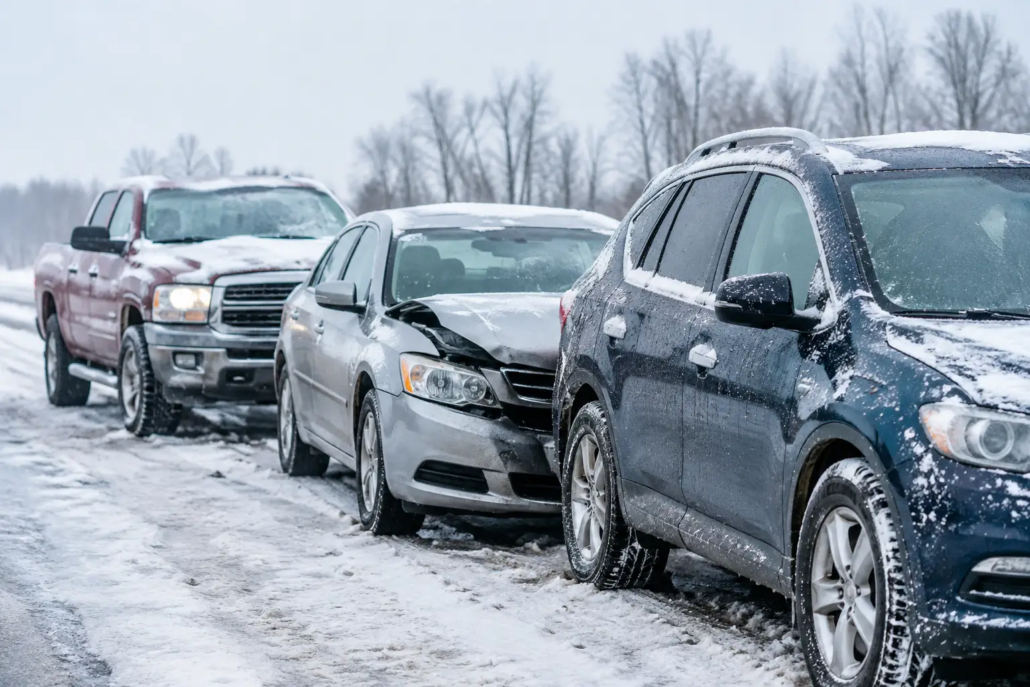
Winter Pileup Insurance Claims in Michigan
Whiteout conditions, black ice, and suddenly stopped traffic can turn a routine Michigan drive into a chain-reaction crash within seconds. Afterward, injured drivers and passengers often face a confusing reality: several vehicles, several insurance companies, conflicting accounts of what happened, and medical bills that cannot wait. A winter pileup insurance claim Michigan residents file may involve far more than fixing a damaged vehicle.
The steps taken in the first days can affect access to No-Fault benefits, preservation of critical crash evidence, and the ability to challenge an insurer that delays or denies coverage. If you were hurt in a multi-vehicle crash on I-75, I-96, US-131, M-37, or a local road in Detroit, Grand Rapids, Traverse City, or another Michigan community, act quickly while the evidence is still available.
Why Winter Pileup Claims Are More Complicated
A two-car collision can be difficult enough. In a winter pileup, the first impact may trigger several others, and each driver may have a different explanation. One vehicle may have been traveling too fast for icy conditions. Another may have been following too closely. A commercial truck may have been unable to stop. A driver who caused an early collision may leave the scene or have no insurance at all.
That complexity matters because Michigan claims can move on separate tracks. Your own No-Fault policy may be responsible for certain personal injury benefits, while a claim against an at-fault driver may be necessary when injuries meet Michigan’s legal threshold for a bodily injury lawsuit. Property damage questions can also involve the at-fault driver’s insurer, collision coverage, deductibles, and limited vehicle-damage remedies.
Do not assume that being one of the last vehicles struck means fault is obvious or that every insurer will agree. Police reports are valuable, but they may be preliminary and may not identify every impact in the correct order. Winter road conditions do not automatically excuse careless driving. Michigan motorists still must drive at a speed that is reasonable for the conditions and maintain enough distance to stop safely.
What to Do After a Winter Pileup in Michigan
Your first priority is medical care. Adrenaline can hide pain from a concussion, neck injury, back injury, internal injury, or fractured bone. Accept emergency evaluation when appropriate, follow up with your doctor, and do not minimize symptoms because you were able to walk away from the crash scene. Treatment records often become essential proof of both injury and necessary care.
If you can do so safely, document the scene before vehicles are moved. Take photographs and video of vehicle positions, debris, skid marks, road ice, visibility, traffic signs, and damage to every side of your vehicle. Weather can change quickly, and road crews may clear or treat the scene before an investigator can return.
Get the names, contact information, license plate numbers, and insurance information for every involved driver if possible. Ask witnesses for their names and phone numbers. Independent witnesses can be especially important in a pileup where drivers may blame the person behind them, the person ahead of them, or the weather.
Preserve evidence after you leave the scene as well. Save damaged clothing, child seats, photographs, towing documents, repair estimates, prescriptions, discharge paperwork, and receipts for medical travel or household assistance. Write down what you remember as soon as you can: where you were traveling, the weather, traffic speed, visibility, the sequence of impacts, and statements made by other drivers.
You should promptly report the crash to your own insurer. Be accurate, but avoid guessing about fault, speed, or injuries before you have the full information. You do not need to accept an adjuster’s first assessment of the crash or sign a broad medical authorization without understanding what records it permits the insurer to obtain.
Understanding PIP Benefits After a Multi-Car Crash
Michigan’s No-Fault system can provide Personal Injury Protection, commonly called PIP benefits, regardless of who caused the crash. The available benefits and limits depend on the coverage selected, policy language, household circumstances, and the facts of the collision.
PIP benefits may cover reasonably necessary accident-related medical care, rehabilitation, attendant care in appropriate cases, and certain mileage or transportation expenses. Depending on the policy and circumstances, injured people may also qualify for wage-loss benefits and replacement services for ordinary household tasks they cannot perform because of crash injuries.
However, PIP coverage is not always as straightforward as calling the insurer listed on the vehicle you occupied. Michigan’s priority rules can determine which insurer must pay. Questions can arise when the injured person was a passenger, lived with a relative who carried auto insurance, was using an employer-owned vehicle, or was in a rideshare or commercial vehicle. A person without applicable coverage may need to pursue benefits through the Michigan Assigned Claims Plan.
Deadlines are another danger. Claims for overdue PIP benefits are generally subject to a one-year limitation tied to when an expense is incurred. Waiting to seek advice until medical bills have accumulated can put necessary benefits at risk. Notify the appropriate insurer early and keep copies of every claim form, bill, letter, email, and explanation of benefits.
When Fault Still Matters in a Michigan Winter Pileup Insurance Claim
No-Fault benefits do not eliminate every claim against a negligent driver. If a person suffers death, permanent serious disfigurement, or a serious impairment of body function, they may have the right to seek noneconomic damages from the driver or other responsible parties. A serious impairment analysis depends on the specific injury and how it has affected the person’s ability to live their normal life.
Fault may also matter when a truck driver, trucking company, delivery business, vehicle owner, road contractor, or another party contributed to the crash. Commercial vehicle cases can require fast action because electronic logging data, dash camera footage, maintenance records, dispatch communications, and onboard data may not be preserved indefinitely.
Insurers investigating a pileup will look for evidence of braking, speed, following distance, lane position, distracted driving, tire condition, and weather warnings. That is why photographs, vehicle data, witness statements, 911 calls, and nearby business or traffic-camera footage can be so valuable. Some footage is overwritten within days.
Michigan follows comparative fault principles. An injured person’s own actions may be raised by an insurer or defense lawyer to reduce a recovery in some cases. But an allegation that someone was driving in snow does not end the inquiry. The full sequence of events, each driver’s decisions, and the available evidence must be examined.
Watch for These Insurance Problems
A polite adjuster is not necessarily evaluating your claim in your best interest. In a serious winter crash, common disputes include an insurer claiming treatment is unrelated to the collision, questioning whether care is reasonable, delaying wage-loss payments, asserting that another insurer is responsible, or pressuring an injured person to settle before the long-term consequences are known.
Be particularly cautious about a quick settlement offer if you are still treating, have not returned to work, or do not yet know whether surgery, physical therapy, or specialist care will be needed. Once a liability claim is settled and released, reopening it is usually not an option simply because injuries prove more serious than expected.
It is also wise to keep a simple daily record of symptoms and limitations. Note missed work, sleep disruption, headaches, inability to drive, help needed with children or household tasks, and appointments you attend. This is not a substitute for medical records, but it can help show the real-life effects of an injury that may not be visible in a single office note.
Get a Legal Review Before Evidence Disappears
A multi-vehicle winter crash can leave a family dealing with pain, lost income, vehicle problems, and calls from multiple insurers at once. You should not have to sort out priority rules, policy coordination, fault disputes, and benefit deadlines while trying to heal.
Neumann Law Group offers free consultations for people injured in Michigan crashes and is available 24/7. An early legal review can help identify available insurance coverage, protect evidence, communicate with insurers, and evaluate whether a denial or low offer should be challenged.
The road may have been icy, but your rights should not be left uncertain. Get medical care, preserve what you can, report the claim promptly, and seek help before the evidence and deadlines begin working against you.


Leave a Reply
Want to join the discussion?Feel free to contribute!