
Can a Detroit Bicycle Accident Lawyer Help After Dooring?
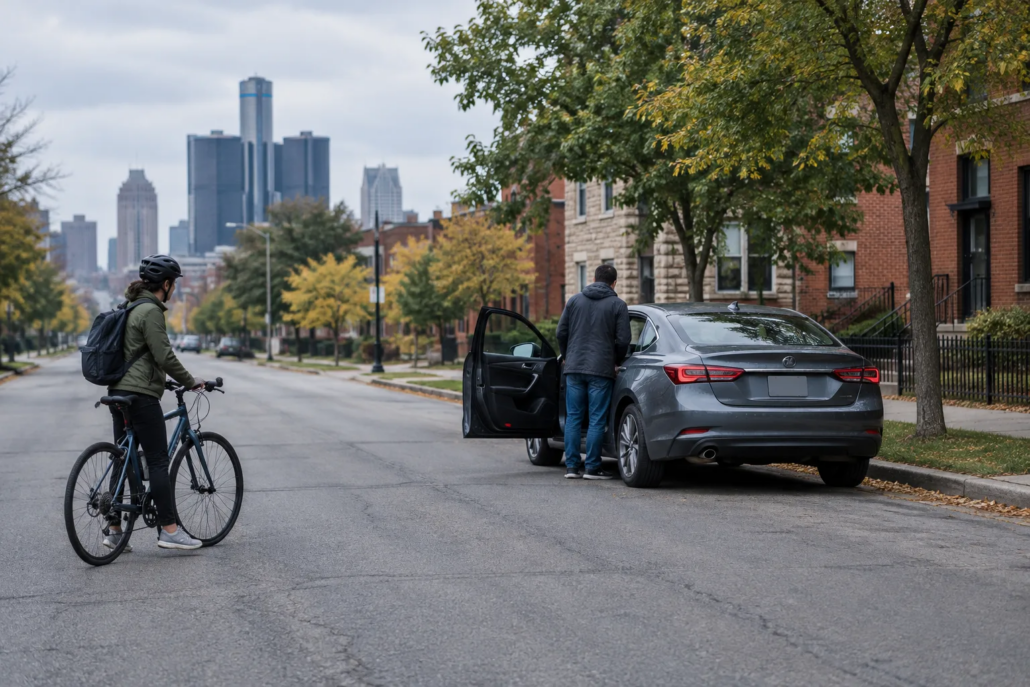
A driver parks along a Detroit street, and a cyclist approaches in the same lane or a marked bike lane. If the car door swings open into the cyclist’s path, a collision can happen before the rider has room to stop or steer away. A person searching for a Detroit bicycle accident lawyer may be trying to understand whether the driver, cyclist, or another factor could be legally responsible—and what proof could help answer that question.
These cases often turn on details that can disappear quickly: where the car and bicycle were, how far the door opened, what each person could see, and whether anyone witnessed the impact. Neumann can help readers understand the issues to consider without assuming that a claim will have a particular outcome. This article covers when a claim may be possible, how to document the scene, and what to preserve and record afterward.
Can a Detroit Cyclist Have a Claim After a Car Door Opens?
A cyclist may have a claim if evidence supports that another party’s conduct contributed to the collision and the cyclist suffered injury or loss. A driver or passenger who opens a door into approaching traffic may be one source of potential responsibility. The specific duties and legal standards depend on the circumstances and applicable Michigan law; the fact that a door opened does not, by itself, decide who is at fault.
Important questions include whether the car was parked or stopped, where the cyclist was riding, how the door opened, and whether the person opening it had a reasonable opportunity to check for approaching traffic. Visibility, lighting, traffic flow, parked vehicles, and the presence or condition of a bike lane may also matter. A witness or video recording may help establish the sequence, but the evidence must be considered as a whole.
Michigan’s comparative-fault rules may affect how responsibility is assessed when more than one person’s conduct contributed to a crash. A cyclist’s location or actions may be examined alongside the driver’s conduct; that does not automatically prevent a claim. A Detroit bicycle accident lawyer can review the available facts and explain how Michigan law may apply. Laws and legal standards can change, so an individual evaluation matters.
What Evidence Can Help Explain a Detroit Dooring Crash?
The most useful evidence may show where the vehicle and cyclist were positioned, how the door opened, and what the driver or passenger could see. If it is safe to do so, a cyclist or witness can record the scene before vehicles move or conditions change. Photographs that document crash-scene evidence can include:
- The open door and its position in the roadway or bike lane.
- The car’s position relative to the curb, lane markings, and bicycle.
- Damage to the door, bicycle, helmet, or other involved property.
- Skid marks, debris, or other visible marks near the collision point.
- The wider street layout, sight lines, lighting, and nearby parked vehicles.
Take both close-up and wider views, and avoid altering the scene to make it look a certain way. If a witness is available, ask for their name and contact information, and note what they say they observed without coaching or pressuring them. In Detroit, a police crash report may also preserve basic information, but it may not answer every question about the door’s movement or the parties’ positions.
Record identifying details for the vehicle and driver, including the license plate, make, model, color, and distinguishing features, if possible. If the vehicle leaves before details are exchanged, witnesses, nearby businesses, or available camera footage may help identify it. These are among the ways to trace a driver after a Michigan crash. Do not assume a nearby camera recorded the event; footage availability and retention vary.
What Should Cyclists Preserve and Record Afterward?
Evidence is not limited to the street scene. Keep damaged clothing, a helmet, and bicycle parts when practical, and photograph them before repair or disposal. If a bicycle needs repair for safe use, document the damage first and retain repair estimates, invoices, and replaced parts when available. Keep original image files and note when and where photographs were taken.
A cyclist can also create a dated record of symptoms and how they change over time. Some symptoms may become noticeable later, so a short daily note can help preserve what the person experienced and how normal activities were affected. Family members or others who observe changes may keep their own factual notes. A qualified healthcare professional can evaluate symptoms. See our related discussion about documenting delayed symptoms after a Detroit head injury.
Keep copies of the police report, witness details, repair records, and communications with insurers. Share accurate information, and avoid guessing about facts that are uncertain. A report or insurance statement may not include every relevant detail, so contemporaneous notes and original evidence can help clarify later questions.
Michigan’s no-fault insurance system may provide benefits to an injured cyclist in some circumstances, but eligibility, priority, and available coverage depend on the facts and applicable law. If the driver cannot be identified or has inadequate insurance, review Michigan uninsured motorist coverage questions after a crash rather than assuming a particular policy applies. Preserve any evidence that could identify the vehicle and seek advice about potentially relevant policies.
Frequently Asked Questions
Does a cyclist automatically have a claim if a car door hits them?
No. A dooring collision does not automatically establish that the driver or passenger is legally responsible. The available evidence, the parties’ actions, the cyclist’s position, and the applicable Michigan legal standards all matter. A claim may be possible if the evidence supports responsibility and compensable harm, but the facts must be assessed individually.
Can a witness help if they did not see the exact moment of impact?
A witness may still have useful information, such as where the car and cyclist were just before the crash, whether the door was already open, or what happened immediately afterward. Their account may be considered with photographs, video, physical evidence, and other records. Witnesses should describe only what they personally observed, not make assumptions about fault.
What if the driver left before I got their information?
A missing driver does not necessarily end the inquiry. Details about the vehicle, witnesses, nearby cameras, and the location and time of the crash may help identify what happened. Possible insurance options depend on the circumstances and policy language. Preserve what you know and have a qualified attorney review whether further investigation or coverage issues may apply.
What if I was riding outside a marked bike lane?
The absence of a bike lane does not, on its own, answer whether a cyclist has a claim. The roadway layout, applicable traffic rules, the driver’s conduct, and the cyclist’s actions may all be relevant. Michigan fault rules can affect the evaluation, so a lawyer would need to review the specific location and circumstances rather than draw a conclusion from lane position alone.
How Neumann Can Help
Neumann is dedicated to helping injured people understand the evidence and legal questions that may arise after a crash. For a dooring collision, a review may include scene photographs, witness accounts, vehicle and bicycle damage, available reports, and potentially relevant insurance policies. The firm can explain how Michigan law may apply to the facts and discuss options without promising a particular result.
If you were injured in a Detroit bicycle crash, contact Neumann to request a consultation and case evaluation. A conversation can help clarify what information may be useful to assess your situation.
The information in this article is for educational purposes only and does not constitute legal advice. Contact a qualified attorney licensed in Michigan for advice specific to your situation; laws vary by location and may change.

Leave a Reply
Want to join the discussion?Feel free to contribute!