Why Did a US 131 Tanker Crash Shut Down Grand Rapids Michigan?
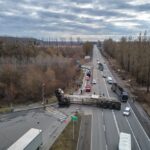
A major highway crash involving a gasoline tanker on US 131 in downtown Grand Rapids, Michigan led to a large-scale fire, road closures, and a rapid multi-agency emergency response. The incident, which occurred near the I-196 interchange, involved two commercial vehicles and resulted in both drivers being transported for medical evaluation. Authorities confirmed that the tanker carried approximately 8,000 gallons of fuel, which intensified the fire and required specialized suppression methods from the Grand Rapids Fire Department and assisting agencies. Investigations later focused on driver actions, roadway conditions, and speed as contributing factors. Legal and insurance questions quickly followed, especially regarding liability in commercial trucking incidents involving hazardous materials. Individuals seeking information on injury claims and legal rights often consult resources such as accident injury in Michigan to understand potential next steps after similar roadway incidents.
Understanding the US 131 Tanker Fire Incident
The crash occurred when a flatbed truck and a gasoline tanker were involved in a collision on southbound US 131 near downtown Grand Rapids. According to preliminary findings from the Grand Rapids Police Department and fire officials, the flatbed driver was cited for traveling too fast for conditions, which is a key factor in crash investigations involving commercial vehicles. After impact, the tanker ignited, creating a prolonged fire that shut down both directions of the highway for hours. Emergency responders, including the Grand Rapids Fire Department, used specialized foam to control the blaze due to the presence of flammable liquid cargo. Highway safety oversight and incident response procedures from agencies like the Michigan Department of Transportation often become central to post-accident reviews, especially when infrastructure and hazardous materials are involved. Public reports and updates were documented alongside official statements and are referenced in Michigan accident attorneys resources that track serious roadway events.
What Laws and Safety Rules Apply in Commercial Truck Crashes
Commercial truck crashes involving hazardous cargo fall under a combination of state traffic laws and federal trucking regulations, including standards enforced by the Federal Motor Carrier Safety Administration. In Michigan, drivers have a legal duty to operate vehicles at safe speeds given weather, traffic, and roadway conditions. When a citation such as “driving too fast for conditions” is issued, it often becomes a key element in determining negligence. Investigators also examine vehicle maintenance records, driver logs, and compliance with cargo transport rules. Because tanker trucks carry flammable materials, additional safety regulations apply regarding containment, inspection, and emergency response readiness. Legal commentary and case breakdowns related to such incidents are often compiled in attorneys resources that explain how liability may be evaluated after multi-vehicle highway fires.
Key Legal Questions After a Multi-Vehicle Highway Fire
After incidents like the US 131 tanker fire, several legal questions typically arise. Determining liability is often complex, particularly when more than one commercial driver is involved. Investigators must assess whether speeding, improper lane control, mechanical failure, or road conditions contributed to the crash. Another key issue is whether any party violated trucking safety regulations or company policies governing driver conduct. Victims and drivers may also question how insurance coverage applies when hazardous materials are involved and whether additional compensation may be available for injuries, medical treatment, or property damage. These issues often require detailed accident reconstruction and regulatory review. Legal guidance is commonly sought through Grand Rapids, Michigan accident attorneys who analyze fault allocation in commercial vehicle collisions.
How Legal Professionals Evaluate Trucking and Hazardous Material Crashes
Legal professionals handling trucking and fire-related highway incidents typically begin with evidence preservation, including vehicle data, crash scene analysis, and witness accounts. Attorneys also review police citations, such as speeding violations, which can strongly influence liability determinations. In cases involving tanker fires, additional technical experts may be consulted to evaluate fuel ignition sources and compliance with transport safety standards. Attorneys assist clients in navigating insurance claims that often involve multiple carriers, including commercial trucking insurers. They also assess whether federal trucking rules were followed before the crash occurred. For individuals impacted by similar events, consultation options such as Free Consultation provide an initial review of potential legal claims and available remedies.
Road Safety Awareness and Risk Reduction in Truck Traffic Zones
Highway corridors like US 131 are heavily traveled by both passenger vehicles and commercial trucks, increasing the importance of speed control and defensive driving. Safety agencies emphasize maintaining safe following distances, especially near construction zones or interchanges where traffic patterns change rapidly. Commercial drivers are required to adjust speed based on weather and congestion, and failure to do so can lead to severe consequences when heavy loads or hazardous materials are involved. Public safety campaigns often highlight the importance of compliance with transportation regulations and attentive driving practices. Broader safety discussions and case reporting on incidents like this are commonly compiled through Grand Rapids, Michigan accident attorneys informational resources that track roadway risk trends.
Understanding the Broader Impact of the US 131 Crash
The US 131 tanker fire illustrates how quickly a highway collision can escalate into a major emergency when hazardous materials are involved. Beyond immediate injuries and vehicle damage, such incidents trigger road closures, environmental concerns, and complex liability investigations. Determining fault requires analysis of driver behavior, vehicle condition, and compliance with safety regulations. The presence of multiple commercial vehicles adds further complexity to insurance and legal outcomes. Understanding these factors helps clarify how responsibility is assigned and what rights may exist for those affected.
Neumann Law Group
Prudential Tower
800 Boylston St, 16th Floor
Boston, MA 02199
(617) 918-7790
www.neumannlawgroup.com