What Evidence Can a Grand Rapids Truck Accident Lawyer Find?
A collision involving a tractor-trailer or other commercial vehicle can leave an injured person with immediate questions: Which company operated the truck? Were there witnesses? Could the vehicle’s onboard systems or business records help explain what happened? A Grand Rapids truck accident lawyer may assess those questions alongside the physical evidence. Businesses that may be connected to a Grand Rapids commercial vehicle crash can include an owner, carrier, employer, or contractor, but their roles should be investigated rather than assumed.
For an injured person or family, evidence can help clarify how a collision occurred, who may have relevant information, and what losses followed. Some records are held by businesses and may be subject to routine retention or deletion practices, so the timing of preservation requests can matter. Neumann offers guidance on the kinds of evidence that may be important. This article explains how to identify the truck and related businesses, document the scene and witnesses, consider records specific to commercial vehicles, and preserve information about injuries and recovery. No single document establishes responsibility by itself; the evidence must be evaluated in context.
What evidence should a Grand Rapids truck accident lawyer assess first?
Start with the information that helps identify the vehicle, its operator, and people who saw the crash. Details that seem minor at the scene may help connect the physical evidence to the right vehicle or business later. Gathering information should never require entering traffic or putting anyone at risk.
Identify the truck, carrier, and related businesses
If it is safe and practical, note the truck’s license plate, company name or other markings, trailer details, and any identifying number visible on the vehicle. A photo from a safe location may help, but markings may identify only one part of a business relationship. The registered owner, motor carrier, employer, leasing company, or contractor could be different entities. Learning which businesses may have had a role requires investigation, not an assumption based on a logo or vehicle marking. For more context, see businesses that may be connected to a Grand Rapids commercial vehicle crash.
Preserve scene details and witness information
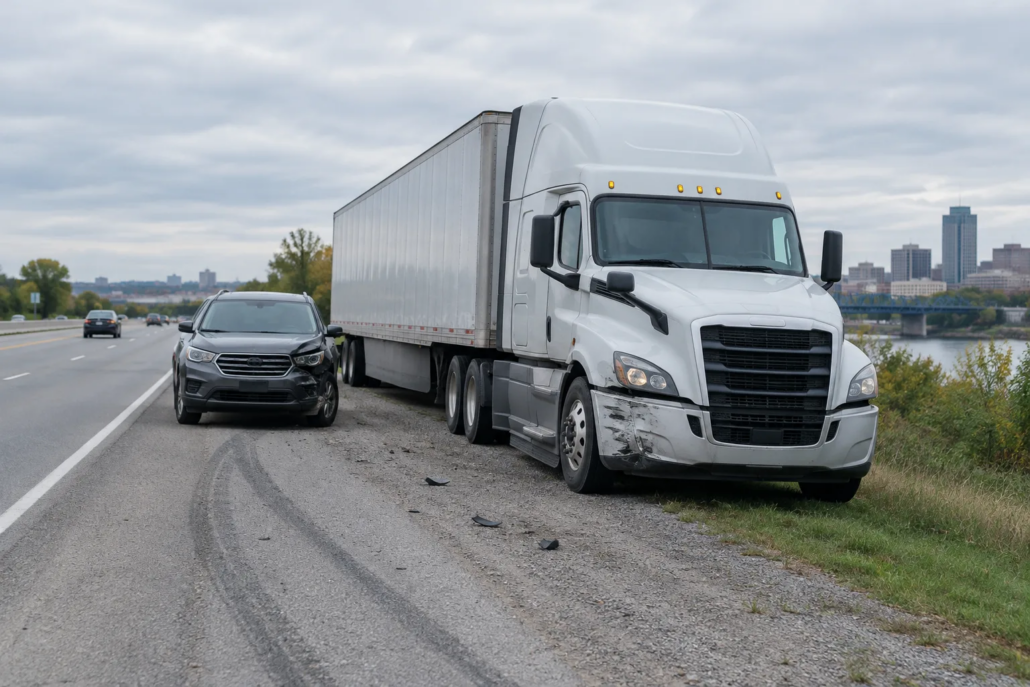
Photographs may show vehicle positions, damage, road conditions, traffic controls, debris, weather, and visible sightline issues. If another person saw the collision, their name and a reliable way to reach them can be useful. Record the date, approximate time, and location, and note where the vehicles were before they moved if that information is available. In Grand Rapids, a responding agency’s crash report may provide a starting point, but it may not contain every witness account, image, or vehicle detail. A report is one source of evidence, not a substitute for all other documentation.
Which commercial truck records and electronic data may matter?
Commercial vehicles can generate or be associated with records that are not available in an ordinary passenger-car collision. Depending on the vehicle and the circumstances, relevant material may include onboard event or location data, driver duty records, dispatch messages, delivery schedules, inspection reports, and maintenance history. These records can help establish a timeline or provide context, but their existence and contents vary. Electronic information may be stored in different systems and retention periods may differ, so an early review of what could be relevant can be important.
Examples of potentially useful records include:
- Driver and duty information: Qualification materials, work and rest records, and trip-related documents may help establish who was driving and the timing of a trip.
- Dispatch and business communications: Messages, route instructions, or scheduling records may help explain what instructions were given and when.
- Inspection and maintenance history: Vehicle inspection forms, repair records, and reports of known mechanical issues may be relevant to the vehicle’s condition.
- Onboard data: Depending on the truck and equipment, systems may record information about speed, braking, location, or other vehicle activity. See more about electronic data from a Michigan truck crash.
These records do not automatically prove that a driver, carrier, or another party caused a crash. Their meaning depends on context, accuracy, and how they relate to other evidence. A Michigan truck crash may also involve a police investigation and insurance inquiries. Grand Rapids-area crash documentation can be one part of that larger picture, while business records may be held separately by a carrier or another company.
How can people help preserve evidence and document injuries?
Evidence can become harder to find as time passes. Vehicles are repaired or returned to service, video may be overwritten, and business records may be retained only under ordinary schedules. A person involved in a crash may not know which records exist or which party controls them. Depending on the circumstances, an attorney can assess potentially relevant records and communicate a preservation request to an appropriate business. A preservation request does not establish liability; it asks that potentially relevant material not be discarded while the matter is evaluated.
Practical documentation may include:
- Keep copies of crash-related documents, photographs, witness contact details, and communications with insurers or businesses.
- Note when and where images or other files were created, and preserve original files when possible rather than relying only on edited copies.
- Track symptoms, limitations, treatment visits, and changes in ordinary activities. Daily notes about symptoms and recovery after a Grand Rapids crash can help create a personal record, but they do not replace medical records or care from qualified professionals.
- Avoid speculating publicly about fault or altering evidence. A person may choose to share relevant information with their attorney or insurer as appropriate to their circumstances.
Michigan’s no-fault insurance system may affect benefits after a motor vehicle crash, while questions about responsibility for a collision may involve separate evidence and legal issues. The rules and processes that apply can depend on the facts and may change. In Kent County, the location of a crash or a potential lawsuit may affect which agencies or court procedures are relevant, so a local attorney can help identify the appropriate context. For information about when to contact a Grand Rapids car accident attorney, consider seeking advice when evidence may be time-sensitive or the business relationships are unclear.
Frequently Asked Questions
What should I note about the truck after a Grand Rapids crash?
If it is safe, note the license plate, visible company markings, trailer details, and any identifying number on the truck. Record the location and approximate time and, where possible, the direction each vehicle was traveling. A photo can help preserve visible details, but do not enter traffic or approach a vehicle if doing so would create a safety risk. The markings may not identify every business connected to the truck.
Can the truck’s onboard data show what happened?
It may provide useful information, depending on the vehicle, installed equipment, and what data was recorded and retained. Some systems may capture details such as vehicle activity or location, but no system necessarily records every relevant event. Data needs to be interpreted in context and compared with other sources, such as photographs, witness accounts, and inspection records. Preservation timing can matter because storage and retention practices vary.
What if I do not know the trucking company’s name?
A person may be able to use details such as the plate, vehicle description, visible markings, crash report, or witness information to help identify the truck and potentially related businesses. The company shown on a vehicle may not be the only business involved in ownership, operation, employment, or contracting. Those connections should be checked rather than presumed. An attorney may help evaluate what identification information is available and what records could clarify the relationships.
Should I keep notes about my recovery after the collision?
Dated notes can help you remember symptoms, activity limits, appointments, and changes in daily routines. Keep them factual and distinguish what you experienced from what another person told you. These notes may supplement, but do not replace, medical records or professional care. How this information may relate to an injury claim depends on the circumstances, and a lawyer can explain how documentation may fit with other evidence.
How Neumann Can Help
Neumann is committed to helping injured people and families understand what evidence may matter after a commercial truck crash. The firm can evaluate available scene information, consider which driver, vehicle, carrier, or business records may be relevant, and discuss whether timely preservation requests are appropriate. That review does not presume that any particular person or company is responsible; it helps clarify the questions and evidence involved. If a crash in Grand Rapids or elsewhere in Kent County has left you uncertain about what information to preserve, contact Neumann to request a consultation and discuss your situation.
The information in this article is for educational purposes only and does not constitute legal advice. Contact a qualified attorney authorized to practice in the jurisdiction that applies to your matter for advice specific to your situation.


Leave a Reply
Want to join the discussion?Feel free to contribute!