What Parties May Matter to a Grand Rapids Crash Lawyer?
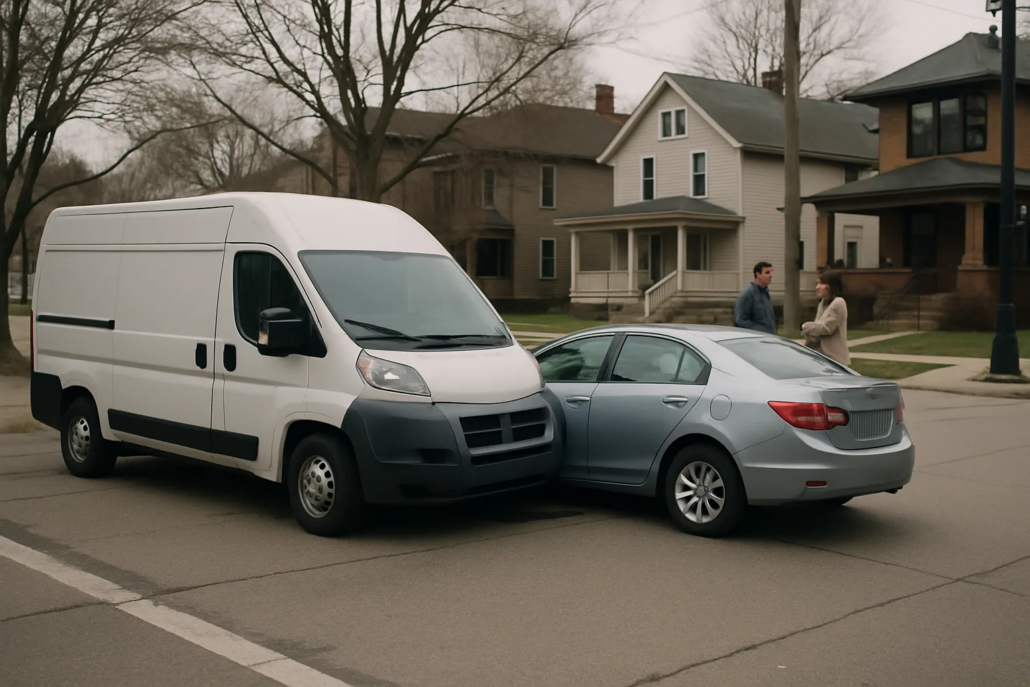
A delivery van turns across a Grand Rapids intersection, backs out of a driveway, or stops suddenly at a curb. If a collision follows, the driver may be only one part of the story. The vehicle could belong to a retailer, logistics company, contractor, or leasing company, and the driver may have been working under another company’s instructions or insurance policy.
If you are searching for a Grand Rapids commercial vehicle accident lawyer, understanding who may share responsibility can help you recognize important evidence before it disappears. A useful starting point is this guide to working with a Grand Rapids car accident attorney after a crash. Neumann can help readers understand the questions that may shape an investigation without assuming that every delivery crash has the same legal outcome.
This article explains how to identify the vehicle owner, employer, contractor, insurer, witnesses, route information, and surveillance sources that may matter. It also discusses vicarious liability, independent contractors, Michigan insurance issues, and practical mistakes that can make evidence harder to obtain.
Why a Grand Rapids Delivery-Vehicle Crash May Involve More Than the Driver
A delivery-related collision may raise two different questions: Did the driver act negligently, and does another person or company bear legal responsibility for the driver’s conduct or for a separate safety failure? Those questions are related but not identical.
Employer responsibility and vicarious liability
In general, an employer may be responsible for an employee’s conduct when the employee was performing assigned work. This principle is often called vicarious liability. Whether it applies can depend on details such as the driver’s employment status, the delivery assignment, the time and location of the crash, and the relationship between the driver and the company.
A company may also face a separate claim based on its own conduct. Potential issues can include inadequate training, unsafe scheduling, negligent vehicle maintenance, poor supervision, or a decision to keep an unsafe vehicle in service. These are fact-specific questions, not automatic conclusions.
Ownership is not the same as employment
The name on the vehicle, registration, delivery app, or uniform may not identify every potentially relevant entity. A van could be owned by one company, leased by another, operated by a contractor, and insured under a commercial policy issued to a different business. In Grand Rapids and elsewhere in Michigan, identifying those relationships early may help preserve the right records and direct questions to the correct parties.
What Evidence Can Identify the Responsible Companies and Policies?
A delivery-vehicle investigation often depends on records that are not available to an injured person without a formal request, authorization, or legal process. A crash report may identify the driver but omit the full business structure behind the vehicle.
Important information may include:
- The vehicle identification number, license plate, photographs, and company markings, if any;
- Registration, lease, purchase, and ownership records;
- The driver’s employer, staffing company, contractor, or delivery platform;
- Dispatch logs, route assignments, delivery timestamps, and app-status data;
- Driver training, supervision, scheduling, and qualification records;
- Maintenance, inspection, repair, and loading records;
- Commercial auto accident insurance and any applicable excess or umbrella coverage;
- Names and contact information for eyewitnesses, nearby businesses, and responding officers; and
- Traffic-camera, doorbell-camera, dash-camera, parking-lot, or warehouse surveillance footage.
A delivery van may travel through neighborhoods, business districts, parking lots, and loading areas where several cameras could capture different portions of the event. Video systems may overwrite footage on a routine schedule. For that reason, a prompt preservation request may be important, depending on the circumstances.
The mechanics of a multi-vehicle collision can create another layer of uncertainty. Reviewing Michigan chain-reaction accident fault may help explain why impact points, vehicle data, witness accounts, and traffic footage can matter when more than one driver or company contributed to a crash.
In Kent County, a police report may be useful, but it is not necessarily the complete investigation. Statements, photographs, vehicle inspections, medical records, and business records may provide additional information. Michigan laws and procedures can vary by location and may change after publication, so a licensed attorney can explain how current rules apply.
When Contractors, Platforms, and Fleet Owners May Matter
Not every delivery driver is a direct employee. Some drivers work through a contracting company, staffing arrangement, or app-based platform. Others use a personal vehicle for business deliveries. The legal and insurance analysis can change depending on what the driver was doing at the moment of impact.
For example, relevant questions may include:
- Was the driver actively delivering an item, traveling to a pickup, waiting for an assignment, or using the vehicle for a personal trip?
- Who controlled the driver’s route, schedule, training, and delivery instructions?
- Did the driver use a company-owned van, a leased vehicle, or a personal car?
- Which policy covered the vehicle and the driver at the time of the collision?
- Did a separate company load the vehicle, maintain it, or direct the delivery?
A contractor relationship does not automatically eliminate a company’s responsibility, and it does not automatically create liability. The contracts, actual working relationship, applicable insurance policies, and facts of the crash must be examined. Readers comparing delivery work with app-based driving may find this discussion of Michigan app status and insurance coverage useful because an active assignment can affect which coverage questions require attention.
Michigan’s no-fault system may provide personal protection benefits to eligible injured people, subject to statutory requirements and individual circumstances. Liability coverage may address a different part of the claim, including allegations that another party caused the crash. If a delivery vehicle strikes a pedestrian or bicyclist, the interaction between personal protection benefits and other insurance can become especially important; this overview of Michigan insurance coverage after a pedestrian crash provides related context.
What Should Crash Victims Preserve Before Evidence Disappears?
People often focus on the driver’s name and the visible damage to their vehicle. Those facts matter, but a broader record may be needed to evaluate responsibility and insurance coverage.
Generally speaking, a person involved in a delivery crash may wish to preserve:
- Photographs of the vehicles, roadway, lane positions, package area, weather, and nearby signs;
- The delivery vehicle’s plate, company name, unit number, and physical description;
- Names and contact information for witnesses and nearby property owners;
- Medical bills, appointment records, wage information, and communications with insurers;
- A personal account of what happened, written while memories are still fresh; and
- Any information about delivery timing, route location, or the driver’s stated employer.
Avoiding speculation is also important. A driver may identify a company incorrectly, a vehicle may be leased, or a logo may belong to a contracting business rather than the insurer. It is generally safer to preserve what was observed and allow the relevant records to clarify the relationships.
Insurance representatives may request statements or records soon after a crash. Communication with an insurer can affect how the event is documented, so an injured person may consider obtaining legal guidance before making significant decisions. A Grand Rapids commercial vehicle accident lawyer can review the available facts, explain possible parties and policies, and discuss evidence-preservation options without guaranteeing a particular result.
Frequently Asked Questions
Does a delivery company have to pay whenever its driver causes a crash?
Not automatically. Responsibility may depend on whether the driver was an employee, whether the driver was working within assigned duties, and whether the company independently contributed through maintenance, training, supervision, or scheduling. A contractor or platform relationship can produce a different analysis. The vehicle’s insurance policy and Michigan law may also affect available sources of compensation. Each claim requires a review of its specific facts.
How can I find out who insured a delivery van after a crash?
The crash report may identify the vehicle and an insurer, but it may not contain every applicable policy. Registration information, company records, driver communications, insurer correspondence, and formal legal requests may provide additional details. Commercial policies can involve the vehicle owner, employer, contractor, or leasing company. Because insurance information can be incomplete or disputed, an attorney may help evaluate which sources are relevant.
What if the delivery driver used a personal vehicle?
A personal vehicle does not necessarily mean only a personal auto policy matters. The driver may have been working for an employer, contractor, or platform, and business-use exclusions or commercial coverage may apply. The driver’s assignment status, app activity, employer relationship, and policy language can be significant. Michigan no-fault benefits and liability coverage are separate issues that may require careful review.
Can nearby security video help prove what happened?
Potentially. Doorbell cameras, traffic cameras, business surveillance, dash cameras, and warehouse systems may show vehicle movement, timing, impact sequence, or the driver’s actions. Many systems automatically overwrite recordings, and access may require cooperation from the owner or a legal preservation process. Identifying possible camera locations promptly can help determine whether relevant footage exists, although no particular video source or result can be assured.
How Neumann Can Help
Neumann is dedicated to helping injured people understand the broader questions that can follow a delivery-vehicle crash. The firm can evaluate available information about the driver, vehicle owner, employer, contractor, route, maintenance history, witnesses, surveillance, and insurance coverage. Depending on the circumstances, counsel may also investigate whether a separate company contributed to the collision or whether multiple policies could apply.
A Grand Rapids commercial vehicle accident lawyer can explain the legal issues, evidence concerns, and available options in light of current Michigan law. Contact Neumann for a free consultation or case evaluation so the circumstances can be discussed with a licensed attorney.
The information in this article is for educational purposes only and does not constitute legal advice. Contact a qualified attorney licensed in Grand Rapids; Detroit for advice specific to your situation.

Leave a Reply
Want to join the discussion?Feel free to contribute!