
What to Do After a Hit-and-Run in Michigan
A vehicle disappears down I-94, Grand River Avenue, or a neighborhood street after striking you. You may be shaken, hurt, and unsure whether anyone will find the driver. In that moment, hit-and-run reporting Michigan drivers and passengers do can affect the police investigation, the evidence available later, and the insurance benefits your household needs for medical care and lost income.
The first priority is safety and treatment. The next is creating a clear record of what happened before surveillance footage disappears, witnesses forget details, or an insurance company questions the crash. A fleeing driver may be unknown, but that does not mean you have no claim or no path forward.
What Should You Do at the Scene?
If you can do so safely, move out of traffic and call 911. Tell the dispatcher that the other driver left the scene, describe any injuries, and provide the location as precisely as possible. A hit-and-run can involve more than a direct collision. A driver who forces a vehicle off the road, causes a chain-reaction crash, strikes a pedestrian or cyclist, or damages a parked car may still be responsible even if there was no meaningful conversation at the scene.
Do not chase the vehicle. Pursuing a fleeing driver can turn one dangerous event into another and may make it harder for officers to determine what occurred. Instead, write down or record what you remember: the vehicle’s color, make, model, body style, damage, direction of travel, plate number or even partial plate characters, and any description of the driver.
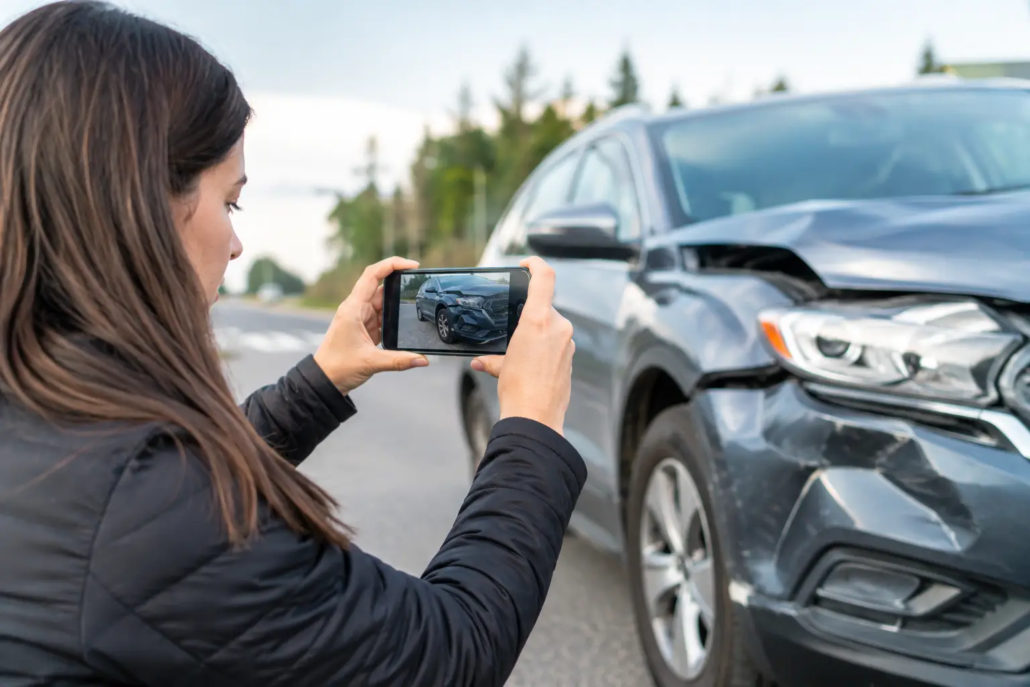
Photograph your vehicle, the roadway, debris, skid marks, nearby intersections, and visible injuries if your condition allows. Look for cameras on businesses, residences, parking lots, buses, or traffic corridors. If someone saw the impact, ask for their name and contact information. A witness who can identify the vehicle or explain how the crash happened can be critical when the other driver disputes fault or is never located.
Hit-and-Run Reporting in Michigan Starts With Police
Michigan law generally requires a driver involved in a crash causing injury, death, or at least $1,000 in property damage to report the crash to police immediately by the quickest available means. A driver also has duties to stop, provide identifying and insurance information, and offer reasonable assistance when someone is injured. Leaving instead can expose that driver to serious criminal consequences.
For the injured person, promptly reporting the collision serves a separate purpose: it creates an official record. Ask responding officers how to obtain the report number, and later review the report for basic accuracy. It may contain the time and location, witness information, vehicle descriptions, observations from officers, and whether the driver was identified.
A police report is not the final word on fault, and it does not guarantee that an insurer will approve a claim. Still, failing to make a report can give an insurer room to argue that the crash was not promptly documented or that the injuries came from another event. If an officer does not come to the scene, contact the appropriate local police agency as soon as possible to ask how to make a report. Keep notes of every call, including dates, names, and incident numbers.
Get Medical Care Even if the Pain Seems Manageable
Adrenaline can conceal injuries after a collision. Neck and back injuries, concussions, internal injuries, and soft-tissue damage may become more obvious hours or days later. Seek emergency care when symptoms are urgent, and arrange follow-up care when pain, dizziness, headaches, numbness, confusion, or limited movement develops.
Your medical record should accurately connect your symptoms to the hit-and-run crash. Be honest about prior injuries or conditions, but do not minimize new symptoms. Insurers often examine gaps in treatment and incomplete histories when evaluating whether a collision caused the care you need.
Under Michigan’s no-fault system, injured people may be eligible for Personal Injury Protection, or PIP, benefits regardless of who caused the crash. Depending on the insurance available and the circumstances, PIP benefits can help pay allowable medical expenses and certain wage-loss or replacement-service benefits. The applicable policy and priority rules can be complicated, particularly when several household vehicles, employers, rideshare services, or commercial vehicles are involved.
Notify the Right Insurers Quickly
Police reporting and insurance notice are different tasks. You should notify your own auto insurer promptly, even if the other driver fled. If you were a passenger, pedestrian, or cyclist, coverage may come through your own policy, a resident relative’s policy, the vehicle involved, or another source depending on the facts.
Give truthful basic information, but avoid guessing about speed, injuries, or fault when you do not know. You can say that you are still receiving medical evaluation and that the other driver left the scene. Before giving a recorded statement or signing broad medical authorizations, understand what your policy requires and what information the insurer is seeking.
Uninsured motorist coverage may become especially important when a hit-and-run driver cannot be identified. That coverage is not automatic in every situation, and policies can impose notice requirements, cooperation duties, deadlines, and proof requirements. Some policies also contain specific language about physical contact or corroborating evidence in phantom-vehicle crashes, where a driver causes a wreck without making contact. Early documentation can make a major difference in these cases.
Do not assume that a denial from one insurer ends the matter. Michigan coverage questions can require a careful review of every potentially applicable policy, including policies held by people in your household. A denial may be based on incomplete information, the wrong priority analysis, or a policy condition that deserves closer review.
Preserve the Evidence Before It Is Gone
The strongest hit-and-run cases are often built from small pieces of evidence gathered quickly. Save photographs and videos in more than one place. Keep damaged property until it has been documented. Do not authorize repairs that erase transfer paint, impact points, or other useful physical evidence without first taking clear photographs and speaking with the insurer.
Evidence worth preserving includes:
- The police report number and all officer or agency contact information
- Witness names, phone numbers, written observations, and any videos they captured
- Medical records, discharge instructions, bills, prescriptions, and proof of missed work
- Photographs of injuries, vehicle damage, the crash location, and debris
- Copies of every insurance letter, email, claim number, and recorded communication
If the crash occurred near a business or residence with cameras, act quickly. Many systems overwrite footage within days. A request for video may need to identify the date, time range, direction of travel, and precise location. In a serious injury case, prompt legal help can also be used to seek preservation of footage and other evidence before it disappears.
When a Hit-and-Run Becomes a Legal and Insurance Fight
A driver may eventually be found through a plate fragment, vehicle damage, witness identification, or camera footage. If that happens, the driver’s liability coverage may be available for pain and suffering and other losses that no-fault benefits do not fully address, subject to Michigan law and the available facts.
But identification is not the only issue. The driver may be uninsured, underinsured, intoxicated, driving for work, operating a borrowed vehicle, or insured under a policy with disputed coverage. Families may also face disputes over medical bills, attendant care, wage loss, or an insurer’s claim that treatment is unrelated to the crash.
These are not problems injured people should have to solve while trying to heal. A legal review can identify available insurance, protect required notices, assess denials, and help ensure the evidence tells the full story of a crash that another driver tried to leave behind.
Neumann Law Group offers free consultations and is available 24/7 for Michigan crash victims and families. After a hit-and-run, protect your health first, make the report, save what you can, and get help before critical evidence and insurance rights begin to slip away.


Leave a Reply
Want to join the discussion?Feel free to contribute!