
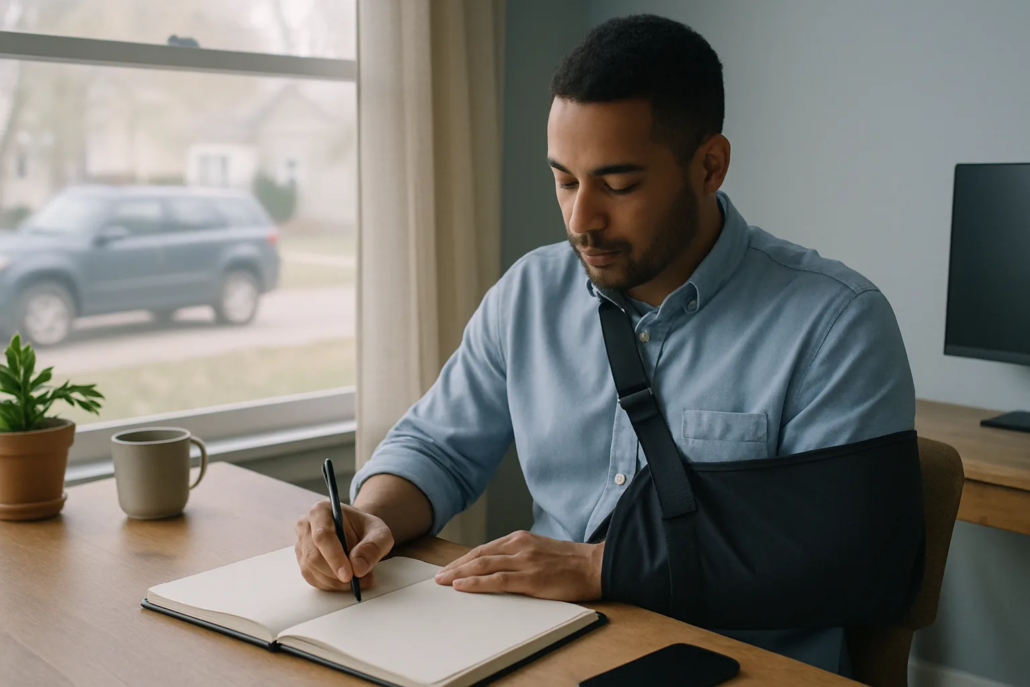
Could Daily Notes Aid Grand Rapids Injury Claim Proof?
After a car accident, details that seem obvious on the first day can become difficult to recall weeks later. Pain may fluctuate, treatment may change, and ordinary activities such as sleeping, driving, working, or caring for family may become harder to describe accurately. For many people considering a Grand Rapids injury claim, a daily symptom and recovery journal can provide an organized record of what happened between appointments.
A journal is not a substitute for medical care, medical records, employment documentation, or legal advice. It is one part of a larger file that may include bills, provider instructions, photographs, insurance communications, and other evidence. Neumann helps Grand Rapids injury victims understand how these records may fit into Michigan personal injury claims after an accident. This article explains what a journal can document, what it cannot prove by itself, and how to keep one in a careful, credible way.
How a Daily Journal Can Support Grand Rapids Injury Claim Evidence
A contemporaneous record—one made close to the time of an event—may help preserve details that are hard to reconstruct later. In a personal injury matter, dated notes can show patterns: whether symptoms stayed constant, improved, worsened after certain activities, or changed following treatment.
What to record each day
Keep entries factual and specific rather than dramatic. Depending on the situation, a person might record:
- Symptoms noticed, their location, and how they affected movement or concentration.
- Activities that became difficult, such as walking, lifting, driving, cooking, or completing household tasks.
- Sleep disruption, fatigue, or difficulty maintaining a normal routine.
- Medical appointments, therapy sessions, provider instructions, and changes in care.
- Medication or treatment effects as personally observed, without attempting to diagnose a condition.
- Missed work, reduced duties, canceled plans, or activities that could not be completed.
For example, “I could not sit through a full work meeting and had to stand twice” is more useful than “my pain was unbearable.” The first statement identifies a functional effect that can potentially be compared with work records or other evidence. It does not prove fault or establish a particular medical diagnosis.
A journal may also help someone prepare accurate questions for a healthcare provider. It should supplement, not replace, appropriate medical treatment and honest communication with providers.
What Grand Rapids Injury Claim Evidence Can—and Cannot—Show
A journal may help explain the day-to-day impact of an injury, but its evidentiary value has limits. Insurance companies, attorneys, and courts may evaluate personal notes alongside medical records, testimony, employment information, photographs, accident evidence, and applicable Michigan law. A private record does not automatically establish causation, liability, insurance coverage, or the amount of damages.
This distinction matters in Grand Rapids car accident cases. A symptom entry may show that a person experienced back pain after a collision. It may not, by itself, prove that the collision caused every later symptom or determine whether a particular no-fault benefit applies. Questions about Michigan automobile insurance coverage after a crash depend on the facts, policy language, and Michigan insurance law.
A practical documentation method
- Date and time: Note when the entry was made and, when relevant, when the symptom or event occurred.
- Observation: Describe what you felt or could not do in plain language.
- Functional effect: Explain how the issue affected work, school, driving, household tasks, sleep, or recreation.
- Treatment connection: Record appointments, instructions, or observed responses to treatment without offering a medical conclusion.
- Supporting material: Identify related documents, such as a work absence record or appointment confirmation, and preserve the original separately.
Avoid turning the journal into an argument. Statements such as “the other driver was definitely negligent” or “this proves permanent damage” are legal or medical conclusions, not daily observations. Similarly, do not guess about facts you did not see.
Common Journal Mistakes in a Michigan Personal Injury Case
The strongest recovery journals are usually consistent, measured, and accurate. They do not need to be lengthy. A short entry made regularly may be more helpful than occasional pages written long after the fact.
One mistake is exaggeration. Describing every day as the worst day, when other records show significant variation, can create credibility concerns. Another is recording only pain while omitting practical details. Functional limitations, sleep changes, missed activities, and treatment effects may provide important context for understanding the injury’s impact.
A journal also should not replace prompt medical attention. Readers can review information about consistent medical treatment after a motor vehicle accident, but a personal log cannot diagnose an injury or determine what care is appropriate. If an appointment is missed, record the reason accurately rather than inventing a medical explanation.
Keep social media and private notes consistent
Public posts, photographs, videos, messages, and activity records may be compared with statements in a claim. This does not mean a person must stop all normal activities, but it does mean online content should be truthful and placed in context. A photograph from a brief outing does not necessarily show that a person could work a full shift or perform every normal task. At the same time, posting that an injury is completely resolved while reporting severe ongoing restrictions may raise questions.
Prompt recordkeeping can also help organize important dates, but it is not a substitute for understanding deadlines or responding to insurance notices. Anyone tracking the timeliness of a Michigan PIP benefits claim should recognize that timing rules can depend on the type of benefit and the circumstances. Michigan law may change, and county or court procedures can vary.
Frequently Asked Questions
Should I start an injury journal immediately after a Grand Rapids crash?
Starting promptly may make it easier to record symptoms and limitations while details are fresh. Still, a late start does not automatically make a journal useless. Explain the timing honestly and avoid recreating entries as though they were written earlier. Use dates, keep original versions when possible, and compare entries with appointment records, work records, and other documents. In Michigan, the value of any record depends on the full context of the claim.
Can a journal prove pain and suffering in Michigan?
A journal may help describe how pain affected daily activities, sleep, work, and relationships. It is one form of personal injury evidence, not conclusive proof of pain and suffering or a specific value. Medical records, testimony, treatment history, and other evidence may also matter. An attorney can assess how a journal fits with the available evidence under Michigan law and the facts of the individual case.
Should I include medication side effects in my recovery journal?
You may record effects you personally observe, such as feeling unusually tired or having difficulty completing a task after taking medication. Do not change dosage, stop treatment, or draw a medical conclusion based only on a journal. Follow provider instructions and communicate concerns to the appropriate healthcare professional. A dated record may help you discuss those observations accurately during appointments.
Could an insurer request to see my personal journal?
Depending on the circumstances, personal notes may become relevant to an insurance claim or dispute. Do not assume that keeping a journal makes every entry privileged or confidential. Avoid speculation, insults, and unsupported conclusions, and preserve the original record. Before providing private notes or responding to significant requests, a person may wish to obtain advice from a licensed Michigan attorney about the specific situation.
How Neumann Can Help
Neumann is dedicated to helping injury victims organize the facts that may matter in a claim. The firm can evaluate how symptom notes, medical records, employment information, insurance communications, and other evidence relate to the circumstances of a Grand Rapids injury. A careful review may also identify gaps, timing concerns, or questions that require further investigation.
If you were injured in a crash or another incident, contact Neumann for a free consultation or case evaluation. The team is committed to fighting for clients’ rights while helping them explore their legal options under Michigan law.
The information in this article is for educational purposes only and does not constitute legal advice. Contact a qualified attorney licensed in Grand Rapids for advice specific to your situation.

Leave a Reply
Want to join the discussion?Feel free to contribute!