
What Can a Grand Rapids Product Defect Lawyer Preserve?
A product that causes an injury may appear to point directly to its manufacturer. However, the company that designed a product, supplied a component, imported it, distributed it, sold it, installed it, or maintained it may also require investigation. Could a Grand Rapids defective product lawyer help determine whether more than one business belongs in a potential claim? In many cases, the answer depends on the product’s history and the evidence preserved after the incident.
If the item, packaging, instructions, or repair records disappear, important questions can become harder to answer. Neumann helps injured people understand the issues that may matter in a Michigan product liability claim, including who handled the product and whether warnings or instructions were adequate. This article explains the potential liability chain, the evidence consumers should preserve, and common mistakes that can undermine an investigation in Grand Rapids, Detroit, and elsewhere in Michigan. For a focused discussion of one part of this issue, review whether an online retailer can share liability in a Michigan product liability lawsuit. For additional context on this issue, see Michigan Supreme Court Discusses Amending Complaints to Add Nonparty at Fault.
Who May Face Liability in a Michigan Defective Product Claim?
A product injury investigation does not necessarily end with the name on the product label. Michigan law recognizes different potential theories of product liability, and the responsible parties can vary based on what went wrong and each company’s role in placing the item into use.
The broader product-liability chain
Potentially relevant businesses may include:
- A designer whose decisions created an unsafe design.
- A manufacturer of the finished product or a defective component.
- An importer, distributor, wholesaler, or retailer.
- An online marketplace or other commercial seller.
- An installer, repair shop, contractor, or maintenance provider.
Whether any particular party may be legally responsible depends on the facts, applicable Michigan law, available defenses, and the evidence. For example, a retailer’s role may differ from that of a company that designed the product, while a maintenance provider’s conduct may matter if the item was altered or improperly serviced.
Sales records, shipping labels, receipts, serial numbers, warranty materials, and service invoices can help identify the businesses involved. These records may also show whether a product passed through Grand Rapids, Detroit, or another distribution channel before reaching the consumer.
What Defective Product Evidence Should You Preserve?
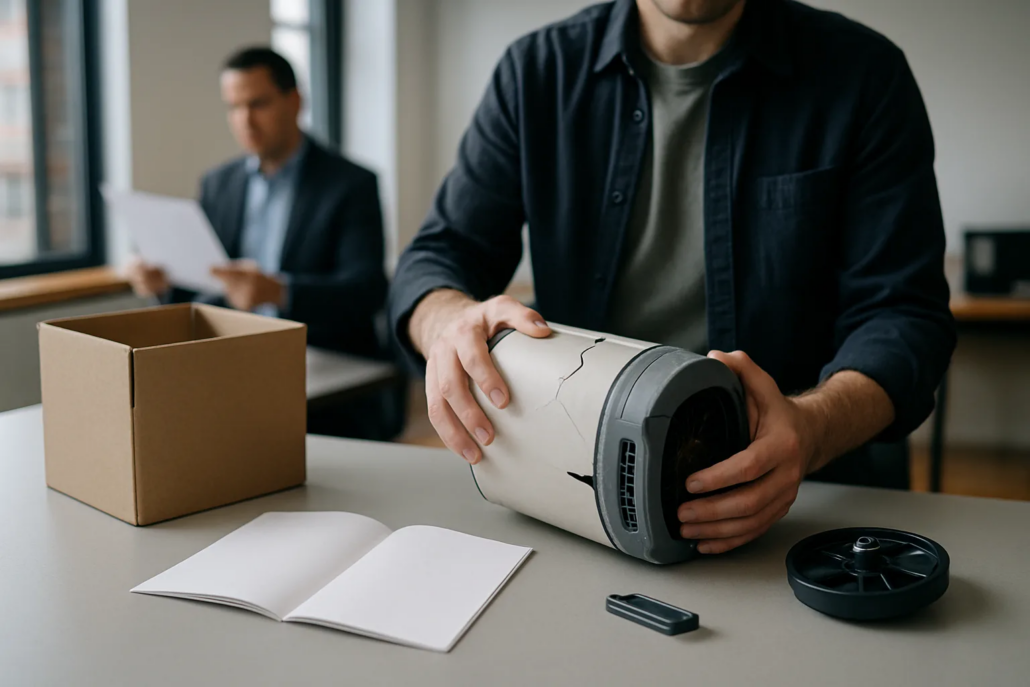
After an injury, people often want to clean up, discard, return, or repair the item. Those steps may be understandable, but they can change the evidence. Generally speaking, an injured consumer should preserve the product and related materials in the condition they were in after the incident, when reasonably possible.
Preserve the item and its history
Useful materials may include:
- The product itself, including broken or detached parts.
- Original packaging, labels, serial numbers, warnings, and safety inserts.
- Printed instructions and saved copies of online manuals or product pages.
- Receipts, order confirmations, warranty documents, and delivery records.
- Photographs or video showing the product, the surrounding area, and visible damage.
- Repair orders, maintenance logs, invoices, and names of service providers.
- Medical records and a personal account of what happened, kept for discussion with counsel and medical providers.
Avoid throwing away the item or sending it back to a seller without considering how its condition can be documented and preserved. If a repair is necessary for safety or function, photographs should generally be taken first, and removed parts and work orders should be retained. Read more about Michigan liability questions involving vehicle maintenance, including why the role of a maintenance provider may deserve separate review.
In Grand Rapids and Detroit, an attorney may also need to evaluate where evidence is located, which businesses possess records, and whether a product inspection should occur. Evidence preservation is not the same as proving liability, but it can help keep possible theories from being lost before they are assessed.
How Do Warnings, Product Use, and Repairs Affect the Investigation?
A product can be defective because of its design, because something went wrong during manufacturing, or because warnings or instructions failed to adequately address a foreseeable risk. Establishing any of these theories may require technical evidence, product testing, industry information, and expert analysis. A photograph of a missing or damaged warning may therefore be significant, even if it does not answer every legal question.
The sequence of events also matters. Write down what the product was intended to do, how it was actually used, what happened immediately before the incident, and whether anyone modified, repaired, installed, or maintained it. Include environmental conditions, settings, attachments, protective equipment, and warnings that were read or followed. Michigan law can consider whether an alleged misuse was reasonably foreseeable, so an accurate account should not omit unusual details merely because they seem embarrassing or unimportant. This is the practical importance of Michigan’s reasonably foreseeable misuse standard in product liability cases.
Common evidence mistakes
Potential problems include:
- Discarding the product or allowing it to be altered before photographs are taken.
- Returning the item to a retailer without preserving packaging and serial-number information.
- Failing to identify every repair shop, installer, contractor, or maintenance provider.
- Relying on memory instead of recording the incident sequence promptly.
- Assuming the warning was adequate without preserving the exact warning and instructions.
A product liability attorney may investigate whether the item differed from its instructions, whether a component came from another company, and whether a service provider changed its condition. A Michigan appellate decision involving design defects and inadequate warnings illustrates why these theories can require careful proof rather than assumptions based only on the fact that an injury occurred. See a Michigan appellate decision involving design defects and inadequate warnings.
Frequently Asked Questions
Can a retailer be included in a Michigan product liability claim?
Possibly. A retailer, distributor, online seller, or marketplace may require investigation when it played a role in selling or distributing the product. The answer depends on the entity’s role, the product’s condition, the applicable Michigan legal standards, and available evidence. Receipts, order confirmations, shipping records, and product labels may help identify the businesses involved. A qualified attorney can evaluate whether a particular seller should be investigated further.
What if the product was repaired after the injury?
A repair does not automatically eliminate a potential claim, but it may change or remove important evidence. Preserve photographs taken before the repair, the removed parts, invoices, work orders, and the repair provider’s identity. Explain what happened and when it happened. Depending on the circumstances, an attorney may need to determine whether the repair was necessary, whether it altered the product, and whether another party’s work contributed to the injury.
Do I need the original receipt to pursue a claim?
Not necessarily. A receipt can help establish where and when the product was purchased, but other records may also be useful. Order confirmations, bank or credit-card records, warranty registrations, photographs, packaging, serial numbers, emails, and testimony may help identify the product and seller. The absence of one document does not answer the legal question by itself, but preserving every available record can make the product’s history easier to investigate.
Can a warning issue matter even if I used the product incorrectly?
It may. The details of the use, the wording and placement of the warning, the product’s intended purpose, and whether the conduct was reasonably foreseeable can all matter under Michigan law. Do not alter the facts to make the incident sound simpler. Preserve the instructions and warning as they appeared, and provide a complete account to an attorney who can evaluate the possible effect of product use on a claim.
How Neumann Can Help
Neumann is dedicated to helping injured consumers understand the possible sources of responsibility in complex product cases. The firm can review the product’s history, the available photographs and records, the incident sequence, and the roles of manufacturers, component suppliers, sellers, installers, and maintenance providers. This review may help identify questions that require further investigation while protecting the distinction between an initial evaluation and a proven legal claim.
If you were injured by a product in Grand Rapids, Detroit, or elsewhere in Michigan, Neumann is ready to evaluate your situation. Contact the firm for a free consultation or case evaluation and discuss your potential legal options with a qualified injury lawyer.
The information in this article is for educational purposes only and does not constitute legal advice. Contact a qualified attorney licensed in Grand Rapids; Detroit for advice specific to your situation.


Leave a Reply
Want to join the discussion?Feel free to contribute!