
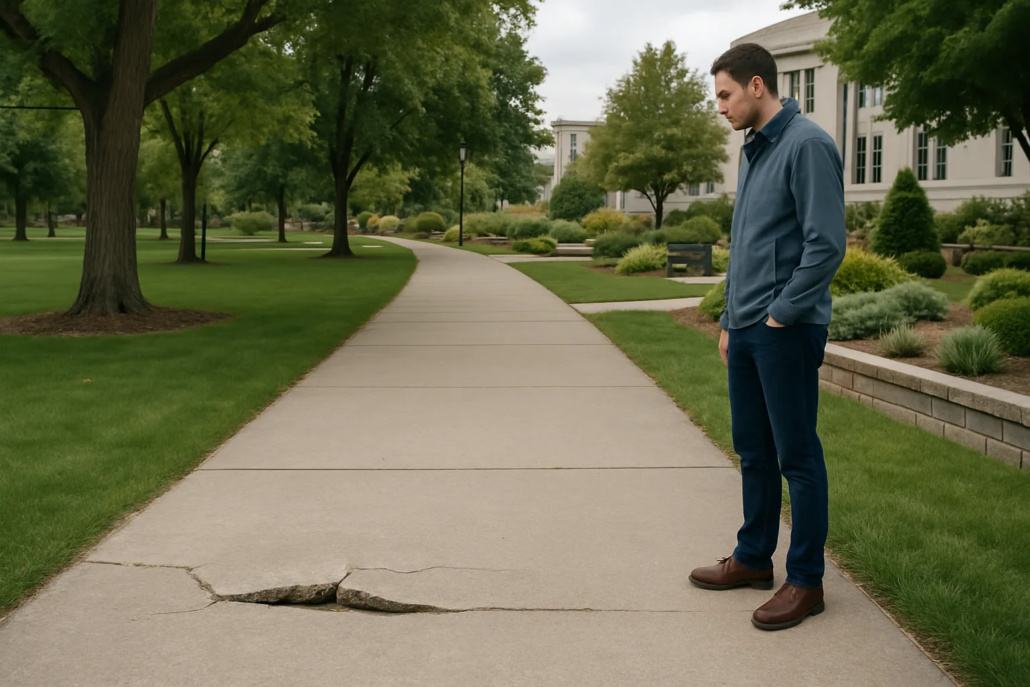
Where Can Traverse City Public Liability Counsel Start?
A fall on a wet floor in a municipal building, a trip on a broken sidewalk, or an injury at a public park can leave a person with more than medical bills. It can also raise a difficult question: When might a Traverse City government liability lawyer help? A public-property injury may involve special Michigan governmental-liability rules, and the identity of the public entity, the exact location, and the nature of the hazard can affect how a claim is evaluated.
Evidence can disappear quickly. Weather can change, a hazard may be repaired, surveillance footage may be overwritten, and witnesses may become difficult to locate. A Michigan Supreme Court decision involving a fall on a public highway illustrates why public-property cases require careful attention to the responsible entity, the location, and the legal theory involved.
Neumann helps injured people understand these issues without assuming that every claim has the same answer. This article explains how Michigan governmental immunity may affect a public-property injury, what evidence to preserve, how to identify the responsible agency, and when a prompt legal evaluation may be useful.
How Does a Traverse City Government Liability Lawyer Evaluate a Public-Property Injury?
A public-property injury is not automatically an ordinary premises-liability claim. In Michigan, governmental agencies may have immunity from certain tort claims when performing governmental functions. However, the Michigan Governmental Tort Liability Act includes exceptions that may apply in particular circumstances. Whether an exception is available depends on detailed facts and the type of property or conduct involved.
Why the public entity and location matter
The property could belong to the City of Traverse City, Grand Traverse County, a township, the State of Michigan, or another public body. A facility that appears municipal may instead be operated, leased, or maintained by a different entity. Identifying the correct owner and maintenance agency is an important early step.
The precise location also matters. A claim involving a public building may raise different questions from one involving a sidewalk, public highway, park structure, recreational area, or state-owned property. An Michigan public park governmental immunity ruling shows why an injury at a city park in Traverse City should not be evaluated solely by asking whether the area appeared unsafe. The applicable immunity rules and any claimed exception must also be considered.
A hazard does not automatically establish liability
Photographs of a defect, wet surface, missing handrail, or poorly maintained area may be important, but they do not by themselves resolve liability. A legal evaluation may also consider notice, control of the property, causation, the visitor’s use of the area, and defenses such as whether a condition was open and obvious. Michigan law can change, and the analysis depends on the facts available.
What Evidence Supports a Michigan Public Property Injury Claim?
The most useful evidence often comes from the scene and from the days immediately after the incident. A person who is injured at a public building, park, sidewalk, or municipal facility may want to preserve information in several categories, depending on the circumstances.
- Photographs and video: Capture the hazard from multiple distances and angles. Include nearby landmarks so the exact location is clear. Show lighting, weather, obstructions, stairs, curbs, pavement transitions, and the approach a visitor would have taken. A Michigan case involving governmental immunity for a cracked street demonstrates why surface conditions and the public entity responsible for maintenance may become central issues.
- Exact location details: Record the building entrance, sidewalk segment, park feature, room, trail, parking area, or other precise location. Note the date and approximate time, weather, lighting, and what the person was doing immediately before the incident.
- Incident reports: Ask whether a report was created by facility staff, parks personnel, security, police, emergency responders, or another agency. Keep any confirmation that an incident was reported. Do not assume that an internal report replaces any formal notice that Michigan law may require.
- Witness information: Obtain names and reliable contact information for people who saw the event, observed the condition beforehand, or helped afterward. Their observations may differ from the injured person’s recollection.
- Medical records and treatment information: Keep discharge papers, bills, appointment information, work restrictions, and other records received from medical providers. A Michigan slip-and-fall case involving government property provides useful context for organizing an evidence file after a public-property fall.
- Clothing and physical items: Preserve shoes, clothing, mobility aids, or other items involved in the incident in their condition at the time, if practical. Avoid altering or discarding them before receiving appropriate guidance.
A photograph should show more than the defect itself. It should help establish visibility, lighting, distance, and whether signs, landscaping, parked vehicles, or other conditions affected what a visitor could see. This is relevant because an Michigan sidewalk-hazard open-and-obvious decision discusses a defense that may arise in some sidewalk and premises cases.
What Steps Can Protect a Traverse City Public-Property Claim?
A public-property injury claim may be affected by notice provisions, immunity defenses, and deadlines that differ from ordinary claims. The rules can depend on the public entity and the alleged exception. Michigan residents should avoid assuming that reporting the incident to a front-desk employee or submitting an insurance form satisfies every legal requirement.
Identify the responsible public entity promptly
Write down every organization connected to the location. Depending on the site, that may include the City of Traverse City, Grand Traverse County, a township, a school district, a state department, or another public body. Look for information on facility materials or official property resources, but treat apparent ownership as something to verify. A Michigan governmental tort liability analysis shows why applying the correct framework to the correct defendant matters.
Preserve evidence before conditions change
If the hazard remains, additional photographs may help show its condition over time, but people should not place themselves in danger to obtain them. Consider preserving original image files and noting when and where they were taken. Write a factual timeline while memories are fresh. Keep communications with the public entity and avoid making speculative statements about fault or the extent of an injury.
Consider prompt legal review
An attorney may help investigate property ownership, request available records, evaluate notice issues, and assess whether a recognized exception could apply. Some public-property cases can proceed despite a governmental defense when the facts fit an applicable exception. A Michigan trip-and-fall case against the state illustrates why the specific defect, causation evidence, and legal theory deserve careful review.
A general overview of Michigan personal injury claim steps after an accident can also help explain why documentation and early claim evaluation matter. Because laws and procedures may change, a prompt consultation can help clarify which rules may apply to an injury in Traverse City.
Frequently Asked Questions
Does an injury at a city park in Traverse City automatically create a claim?
No. An injury at a public park may involve governmental immunity, and liability is not automatic simply because the incident occurred on government-controlled property. The analysis may depend on the public entity, the condition involved, notice, causation, and whether a statutory exception applies. Park rules, maintenance records, photographs, and witness accounts may all be relevant. A lawyer can evaluate the specific facts under Michigan law.
What if the public property belongs to Grand Traverse County instead of Traverse City?
The responsible entity can affect the legal analysis, notice process, and available defenses. A location in Traverse City may be owned or maintained by the City, Grand Traverse County, a township, the state, or another public organization. Property ownership should be verified rather than assumed. Preserving the exact location and reporting information can help an attorney determine which public body may need to be contacted.
Can a public agency be responsible for a sidewalk or street defect?
Possibly, but sidewalk and street claims often involve detailed questions about control, maintenance duties, notice, the nature of the defect, and governmental immunity. Visibility may also become an issue in some cases. Photographs should show the defect, surrounding area, lighting, and the route taken before the incident. These facts do not guarantee a claim, but they may help an attorney assess available legal theories and defenses.
Should an injured visitor wait until treatment ends before seeking legal guidance?
Waiting may create avoidable evidence problems, particularly if a hazard is repaired or relevant records are not preserved. A consultation does not require a person to know the final medical outcome or to predict the value of a claim. Depending on the circumstances, an attorney may discuss documentation, public-entity identification, notice concerns, and coordination of available records while medical evaluation continues.
How Neumann Can Help
Neumann is dedicated to helping injured people understand the issues that can arise after an accident on public property. The firm can review the incident location, available photographs, reports, witness information, medical documentation, and details about the public entity involved. Neumann is committed to fighting for clients’ rights while providing a candid evaluation of the legal questions, including governmental immunity and possible exceptions.
If you were injured at a Traverse City public building, park, sidewalk, street, or municipal facility, Neumann is ready to evaluate your situation. Contact the firm for a free consultation or case evaluation and discuss your potential options with a legal professional.
The information in this article is for educational purposes only and does not constitute legal advice. Contact a qualified attorney licensed in Traverse City for advice specific to your situation.


Leave a Reply
Want to join the discussion?Feel free to contribute!