
How Is Multi Vehicle Accident Fault Michigan Decided?
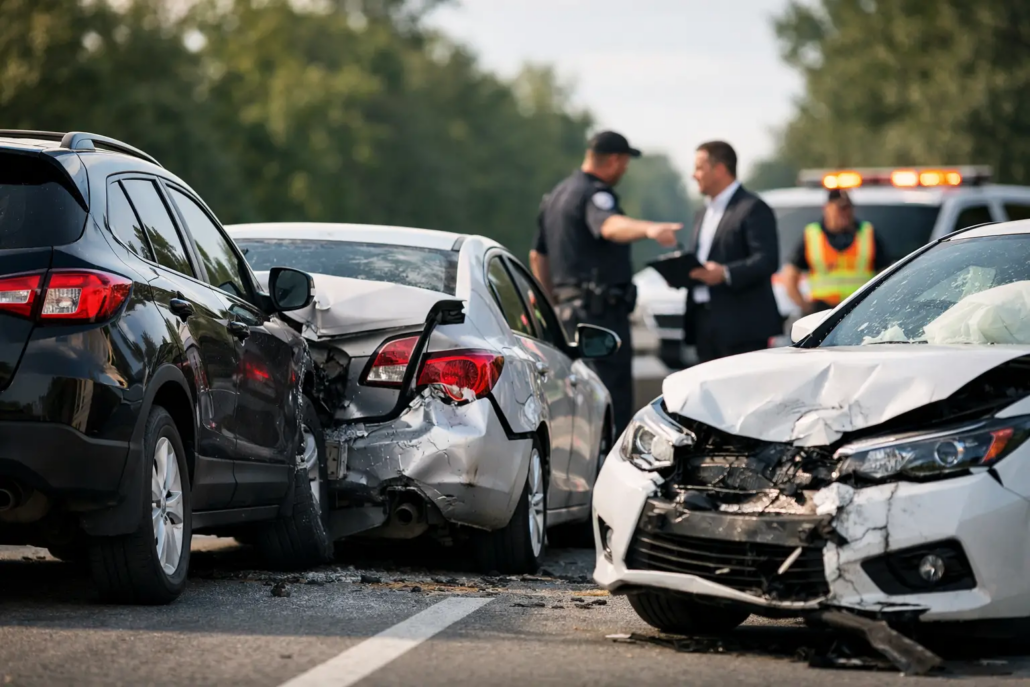
A chain-reaction collision on I-94, I-75, US-131, or a busy Detroit intersection can leave several damaged vehicles, conflicting stories, and injured people wondering who will pay. In a multi vehicle accident fault Michigan case, the answer is rarely as simple as blaming the driver whose car made the final impact. The sequence of events matters, and so does the evidence preserved in the hours and days after the crash.
For an injured driver or passenger, fault is only one part of the legal picture. Michigan no-fault benefits may be available regardless of who caused the wreck, while a claim against an at-fault driver can become critical when injuries are serious, medical costs exceed available coverage, or a family has suffered a devastating loss.
How Is Multi Vehicle Accident Fault Michigan Determined?
Insurance companies, attorneys, and courts examine what each driver did before and during the collision. In a pileup, one careless act may start the crash, but other drivers may also have contributed by following too closely, speeding, changing lanes without care, driving distracted, or failing to react to a hazard that should have been visible.
Consider a common freeway scenario. A driver brakes suddenly after missing an exit. The vehicle behind them strikes the rear bumper, and two more vehicles collide in the resulting chain reaction. The first driver may bear fault if an unsafe maneuver created the emergency. The second driver may be at fault for following too closely. A third driver might have little or no responsibility if there was no reasonable opportunity to avoid the impact.
That is why the position of the vehicles after a crash does not tell the whole story. A vehicle that hits another car from behind is often presumed to have had a duty to maintain a safe distance, but that driver may still have a defense if another motorist cut them off, stopped without warning, or pushed their vehicle forward after being struck.
The same principle applies to intersection collisions. A driver who runs a red light may trigger a multi-car crash, yet another driver may share blame for excessive speed, an unsafe turn, or distraction. Michigan law allows fault to be divided among more than one person or entity when the facts support it.
Evidence Can Decide a Multi-Vehicle Crash Claim
Multi-vehicle collisions create a fast-moving evidence problem. Vehicles are towed, damaged cars are repaired or totaled, road conditions change, and witnesses become harder to locate. An initial police report is valuable, but it is not the final legal word on fault. Officers often arrive after the collision and must reconstruct events from physical evidence and statements made under stressful conditions.
The strongest cases are built from evidence that can confirm the order of impacts and challenge an insurer’s quick assumptions. Depending on the crash, that may include:
- Photos and video of vehicle damage, debris, skid marks, traffic signals, weather, and the roadway
- Dash-camera footage, nearby business surveillance, traffic-camera video, or vehicle event-data recordings
- Statements from independent witnesses, passengers, first responders, and other drivers
- The police report, dispatch records, 911 calls, and citations issued after the collision
- Medical records that connect the injuries to the force and timing of the crash
Photographs should be taken before a vehicle is moved whenever it is safe to do so. Damage patterns can help an accident reconstruction professional determine whether a vehicle was hit once, pushed into another car, or involved in separate impacts. This can matter greatly when an insurer tries to assign all blame to the last driver in the chain.
If a commercial truck, delivery vehicle, rideshare vehicle, or company-owned car was involved, additional records may be available. Driver logs, onboard video, maintenance records, dispatch communications, and employer policies can become important. These records may not be preserved forever, which is one reason injured people should seek legal guidance early.
Michigan No-Fault Benefits Do Not Depend on Proving Fault First
After a serious pileup, medical treatment and household bills do not wait for insurers to finish arguing over liability. Michigan’s no-fault system generally provides Personal Injury Protection, or PIP, benefits to eligible people injured in a motor vehicle accident without requiring them to first prove another driver was at fault.
Depending on the policy and the coverage selected, PIP benefits can include allowable medical expenses, wage-loss benefits subject to statutory limits, and replacement services. The available benefits, insurer priority, coordination with health coverage, and any exclusions can be complicated. A passenger, pedestrian, or person using a family member’s vehicle may have different coverage questions than the named policyholder.
Prompt notice to the appropriate insurer is essential. Keep copies of every claim form, medical bill, explanation of benefits, denial letter, and message from an adjuster. Do not assume that a denial is correct simply because it appears in writing. Coverage disputes often turn on policy language, the timing of notice, or an incomplete understanding of the injured person’s household and available insurance policies.
When Can an Injured Person Pursue the At-Fault Drivers?
No-fault benefits are not always enough to address the consequences of a life-altering collision. Under Michigan law, an injured person may have a third-party claim for pain and suffering when the injury causes death, permanent serious disfigurement, or a serious impairment of body function. Claims may also involve certain economic losses not covered through no-fault benefits.
Serious impairment is not determined solely by an emergency-room diagnosis or whether a person returned to work quickly. The effects of the injury on the person’s normal life matter. A traumatic brain injury, spinal injury, broken bone, chronic pain condition, or psychological trauma can alter a person’s ability to work, care for children, drive, sleep, or participate in activities that mattered before the crash.
In a multi-vehicle case, a claim may be brought against one at-fault driver, several drivers, or potentially another responsible party. For example, a trucking company may face questions about negligent hiring, training, maintenance, or supervision. A bar or restaurant may raise separate issues in an impaired-driving case. Each situation depends on the available evidence and Michigan law.
Michigan’s comparative-fault rules can also affect recovery. If an injured person is found partly at fault, damages may be reduced by that percentage. A person found more than 50 percent at fault generally cannot recover noneconomic damages, such as pain and suffering. Insurers know that even a small allegation of distraction, speeding, or unsafe driving can change the value of a claim, so every fault accusation should be taken seriously.
What to Do After a Michigan Pileup
Your first priority is medical care. Some injuries, including concussions, internal injuries, and soft-tissue damage, may not be obvious at the scene. Follow through with recommended treatment and describe all symptoms accurately to your medical providers. Gaps in care can give an insurer an opportunity to argue that injuries were not caused by the crash or were not serious.
Avoid speculating about fault with an insurance adjuster, on social media, or in messages to other drivers. You can report the basic facts of the accident, but do not guess about speed, distances, or what another driver could see. Those details should be supported by evidence, not pressure from an early phone call.
It is also wise to preserve the damaged vehicle until it can be properly inspected, especially when the collision involved severe injuries, disputed impact sequence, or a commercial vehicle. Before signing releases, accepting a settlement, or allowing an insurer to close a claim, understand what benefits and claims may still be available.
A multi-car crash can leave injured Michigan families facing several insurers while trying to heal. Neumann Law Group can review the facts, identify potential coverage, and take steps to preserve the evidence before the story of the crash is reduced to an insurer’s version of events. Getting answers early can protect both the medical care you need now and the claim you may need later.


Leave a Reply
Want to join the discussion?Feel free to contribute!